
 Cart
Cart



Key Takeaways
- Acne scars and dark spots are two different skin concerns, although they often appear together after acne.
- Dark spots affect skin colour but not texture.
- Acne scars change the skin's texture because collagen has been damaged during healing.
- Pigmentation often fades gradually over time, while acne scars usually require professional treatment to achieve noticeable improvement.
- Identifying the difference helps you avoid spending time and money on treatments that aren't designed for your particular concern.
- Many people have both acne scars and pigmentation at the same time, which is why professional skin assessments can be so valuable.
Anyone who has struggled with acne knows the feeling. The breakout finally heals, but when you look in the mirror, the reminder is still there. Sometimes it’s a brown or reddish mark that refuses to disappear. Other times, you notice a small indentation that catches the light every time you turn your head.
Many people call both of these “acne scars”, but they are actually two different skin concerns. Understanding which one you’re dealing with isn’t simply about using the correct terminology. It changes how you should care for your skin, what results you can realistically expect, and whether skincare products alone are likely to help.
One of the most common conversations we have during consultations at My Cozy Room begins with a client saying, “I’ve had these acne scars for months.”
After examining their skin, we often explain that many of the marks they’re referring to aren’t scars at all. They’re post-acne pigmentation, sometimes called post-inflammatory hyperpigmentation (PIH), which behaves very differently from true acne scarring.
The good news is that dark spots often improve with time and the right skincare routine. Acne scars, however, involve changes beneath the skin’s surface and usually require a different treatment strategy.
This guide explains how to tell them apart, why they develop, and what you can realistically do about each one.
About This Guide
If you’ve ever wondered whether the marks left behind after acne are permanent, you’re certainly not alone.
This guide explains the key differences between acne scars and dark spots, why they form, how to identify them at home, and why they respond differently to treatment. We’ll also share what we’ve learnt after treating acne-prone skin for more than 15 years, including some of the most common misconceptions we hear from clients.
Whether you’re recovering from occasional breakouts or years of persistent acne, understanding your skin is the first step towards choosing treatments that are appropriate for your concerns instead of relying on trial and error.
Who Is This Guide For?
This guide may be helpful if you:
- still have marks after your acne has healed
- aren’t sure whether you’re dealing with acne scars or pigmentation
- have tried brightening products without seeing much improvement
- notice uneven skin texture after previous breakouts
- want to understand which professional treatments may be suitable for your skin
- are looking for realistic expectations instead of miracle promises
The Short Answer: How Can You Tell the Difference?
If you’re looking for a quick way to tell whether you have acne scars or dark spots, try this simple test.
Close your eyes and gently run your fingertips across the area.
If the skin feels completely smooth but appears darker, redder or browner than the surrounding skin, you’re most likely dealing with post-acne pigmentation.
If you can feel small dents, depressions, raised bumps or uneven texture, you’re probably looking at acne scars.
Another trick is to stand beside a window where natural light falls across your face from the side. Texture creates shadows, while pigmentation mainly changes colour. Side lighting often makes shallow acne scars much easier to see.
Of course, many people have both concerns at the same time, which is why the distinction isn’t always obvious.
What Are Dark Spots?
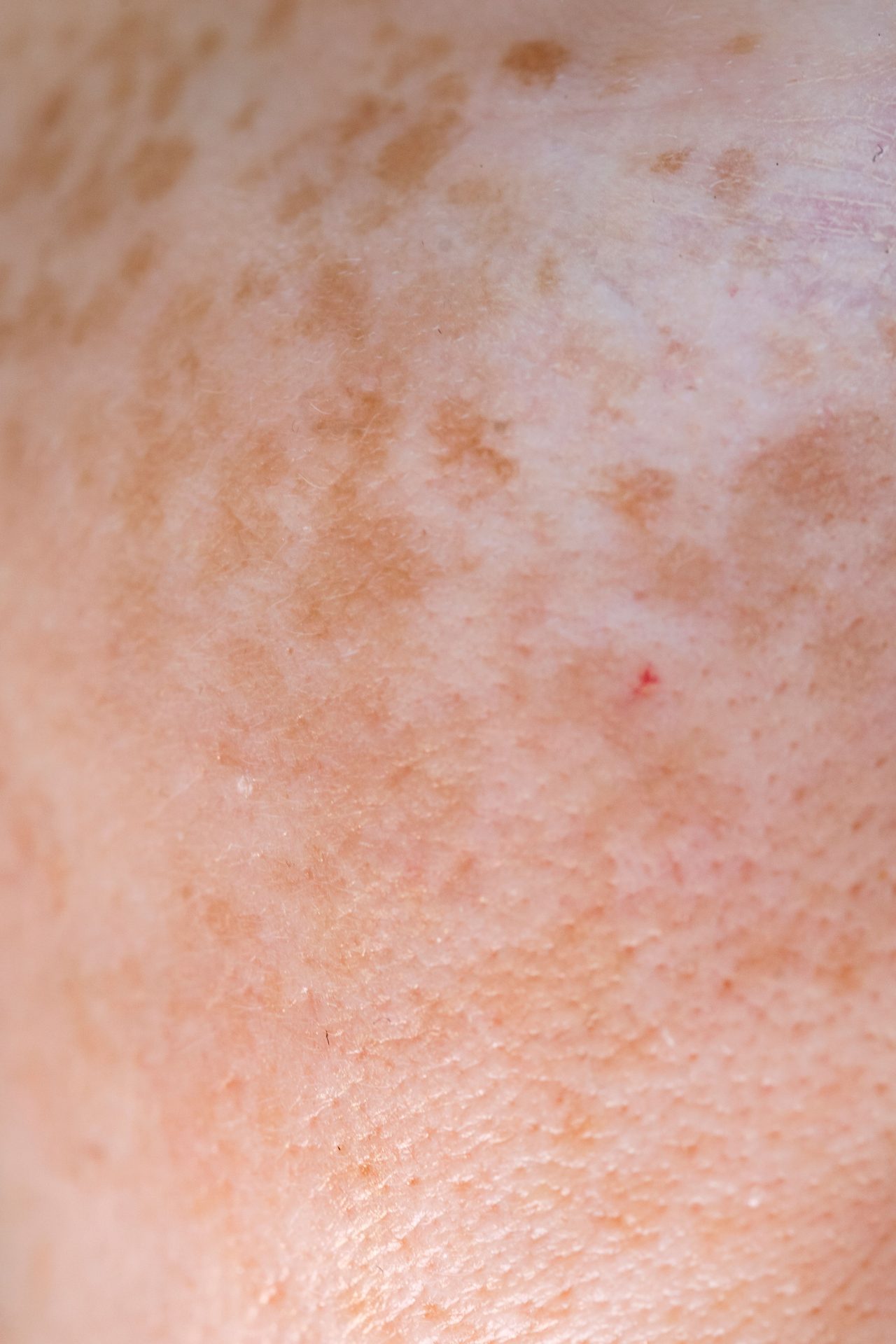
Dark spots are one of the most common marks left behind after acne, but despite how they’re often described, they aren’t actually scars.
When a pimple becomes inflamed, your skin immediately begins repairing itself. As part of this healing process, it may produce extra melanin, the pigment responsible for your skin’s colour. Once the breakout has cleared, that excess pigment can remain behind as a flat brown, grey, red or purple mark, depending on your skin tone.
This is known as post-inflammatory hyperpigmentation (PIH).
Unlike acne scars, dark spots don’t change the texture of your skin. If you run your fingers over the area, it should feel just as smooth as the surrounding skin because the skin’s underlying structure hasn’t been damaged. The difference is simply in the colour.
The encouraging news is that dark spots are often temporary. As your skin naturally renews itself, the excess pigment gradually breaks down and fades. However, this process takes time and varies from person to person. Factors such as your skin tone, the severity of the original breakout, ongoing sun exposure and whether you’re continuing to experience new acne can all influence how quickly pigmentation improves.
For some people, the marks begin to fade within a few months. For others, particularly those with deeper skin tones or more severe inflammation, they may remain visible for much longer. While they can be frustrating, patience and consistent skincare often play just as important a role as any treatment in helping dark spots become less noticeable over time.
What Are Acne Scars?
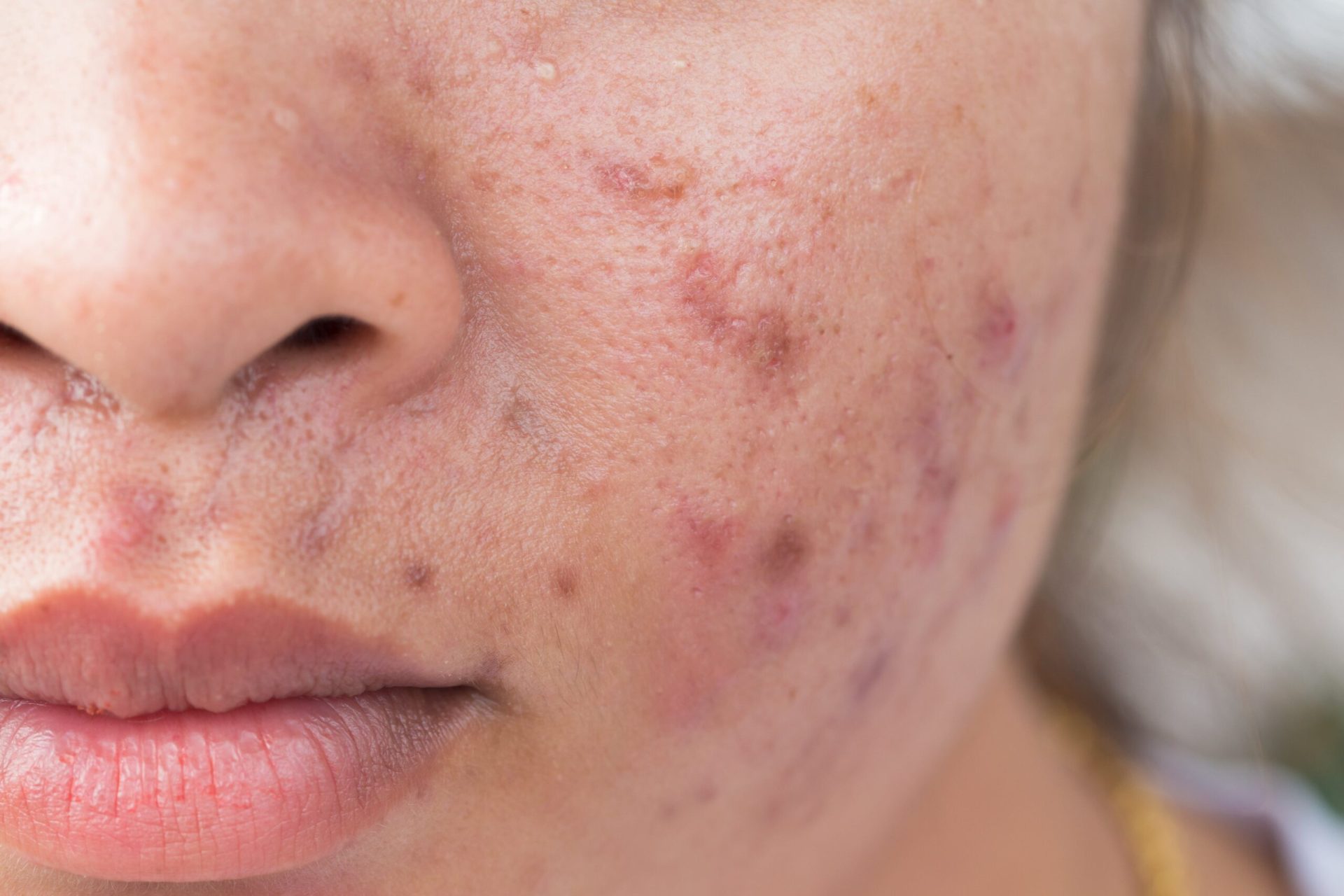
Unlike dark spots, acne scars aren’t caused by excess pigment. They develop when the skin’s healing process is disrupted after a deep or severe breakout.
When acne triggers significant inflammation, it can damage collagen, the protein that gives skin its firmness and smooth texture. As the skin repairs itself, collagen isn’t always restored evenly. If too little collagen is produced, the result may be an indented or pitted scar. If the skin produces too much collagen during healing, a raised scar can develop instead.
This is the key difference between acne scars and dark spots. Dark spots affect the colour of your skin, while acne scars change its texture. In other words, the skin’s surface has been physically altered.
Because of these structural changes, acne scars don’t usually fade in the same way pigmentation does. While any redness or discolouration around the scar may gradually improve over time, the change in texture often remains. That’s why many people notice that their skin still feels uneven even after the dark marks from their acne have disappeared.
The Different Types of Acne Scars
Acne scars don’t all look the same, which is why two people with “acne scars” can have very different skin concerns.
Some scars are small, deep and narrow. These are known as ice pick scars and resemble tiny punctures in the skin. Others are broader with more defined edges, creating shallow depressions known as boxcar scars. Rolling scars have softer, sloping edges that give the skin an uneven or wavy appearance, often becoming more noticeable when light falls across the face from the side.
Less commonly, acne can also leave behind raised scars, also known as hypertrophic scars. Instead of losing collagen during healing, the skin produces too much, causing the scar tissue to sit above the surrounding skin.
It’s also worth remembering that acne scarring is rarely limited to just one type. Many people have a combination of ice pick, boxcar and rolling scars across different areas of the face, particularly if they’ve experienced moderate to severe acne over a long period. This is one reason why treatment plans are often personalised rather than taking a one-size-fits-all approach.
Why Do Some People Scar While Others Don’t?
Not everyone who experiences acne will be left with permanent scars, even if their breakouts look similar.
One of the biggest factors is the severity of the inflammation. When acne develops deeper within the skin, particularly in the case of large, painful cysts or nodules, there’s a greater chance that collagen will be damaged during the healing process. If the skin isn’t able to rebuild that collagen evenly, a scar may form.
Genetics can also play a role. Some people naturally heal with very little visible scarring, while others are more prone to developing changes in skin texture after inflammation.
The way acne is managed matters too. Picking or squeezing pimples repeatedly can increase trauma to the surrounding skin, making healing more difficult and potentially increasing the risk of scarring. Likewise, leaving severe or persistent acne untreated for long periods gives inflammation more time to affect the deeper layers of the skin.
That doesn’t mean every squeezed pimple will inevitably become a scar, or that every severe breakout will leave permanent marks. Skin healing is influenced by many factors. However, treating acne early, avoiding unnecessary manipulation and keeping inflammation under control can all help reduce the likelihood of long-term scarring.
Why People Often Confuse Acne Scars and Dark Spots
It’s easy to see why so many people use the terms interchangeably. Both appear after acne has healed, both can affect your confidence, and both can make your skin look uneven.
In reality, they are two separate issues that often exist side by side.
Imagine you’ve had a particularly inflamed pimple on your cheek. Once it disappears, you’re left with a dark brown mark. At the same time, you notice that the area also feels slightly indented. The pigmentation is a dark spot, while the indentation is an acne scar. As the pigmentation gradually fades over the following months, the scar often becomes even more noticeable because the colour is no longer distracting your eye.
This is something we see regularly during consultations. Clients often tell us they have severe acne scarring, but after examining their skin closely, much of what they’re seeing is actually pigmentation that has an excellent chance of improving. Conversely, some clients focus only on the dark marks without realising there is underlying textural scarring that won’t disappear simply by waiting.
Understanding the difference helps set realistic expectations and allows you to choose treatments that target the right concern.
Can You Have Both Acne Scars and Dark Spots?
Absolutely. In fact, it’s more common than having just one or the other!
Inflammatory acne can leave behind excess pigmentation while simultaneously damaging collagen beneath the skin. This means one breakout can result in both a visible dark mark and a permanent change in skin texture.
This is also why some people feel like their “scars” seem to become worse over time. In reality, the scar hasn’t become deeper. The surrounding pigmentation has simply faded, making the uneven texture easier to notice.
Professional skin assessments are valuable because they identify exactly what you’re treating. Rather than assuming every post-acne mark needs the same solution, your therapist can distinguish between pigmentation, textural scarring, active acne and enlarged pores, all of which require different approaches. If you are considering a facial in Singapore, ask what the treatment can realistically do for each of these concerns.
Do Dark Spots Go Away on Their Own?
One of the encouraging things about post-inflammatory hyperpigmentation is that it often improves naturally.
Your skin is constantly renewing itself, gradually replacing older pigmented cells with new ones. As this process continues, many dark spots slowly become lighter.
However, “eventually” can be a frustratingly long time. Some people notice improvement within a few months, while others find that stubborn pigmentation lingers for much longer, particularly if they have deeper skin tones or continue experiencing new breakouts.
Sun exposure can also prolong the process. Ultraviolet light stimulates melanin production, which can make existing pigmentation darker and delay fading. That’s why sunscreen remains one of the simplest yet most important parts of managing post-acne marks.
Consistency is equally important. Pigmentation rarely disappears overnight, even with active skincare ingredients. Small improvements accumulate over weeks and months rather than days.
Can Acne Scars Heal Naturally?
Unlike dark spots, true acne scars rarely disappear completely on their own. This is because the problem isn’t excess pigment but changes to the skin’s underlying structure.
Once collagen has been lost or remodelled unevenly, the skin doesn’t automatically return to its previous state. While scars may soften slightly over time and become less noticeable as the surrounding skin ages naturally, significant textural improvement usually requires treatments that stimulate collagen remodelling.
This doesn’t mean every scar needs aggressive intervention, nor does it mean improvement isn’t possible. Rather, it highlights the importance of identifying whether you’re dealing with pigmentation or structural changes before investing in products or treatments.
Common Mistakes People Make When Treating Post-Acne Marks
One mistake we frequently see is assuming that a product which worked well for a friend’s pigmentation will also improve acne scars.
Brightening products may gradually reduce excess pigment, but they won’t fill in depressed scars because they don’t rebuild lost collagen. The opposite also happens. Some people become discouraged when they undergo treatments designed to improve skin texture but expect their pigmentation to disappear at the same pace. Since colour and texture improve through different biological processes, they often require different timelines.
Another common mistake is focusing entirely on old marks while continuing to experience new breakouts. Every new inflamed pimple carries the possibility of leaving behind another dark spot or scar. This is why controlling active acne should usually be the first priority. Preventing future damage is often just as important as treating marks that already exist. When booking a men’s facial in Singapore for congestion and post-acne marks, discuss both concerns instead of focusing only on the marks left behind.
What We’ve Learned After Treating Acne-Prone Skin for More Than 15 Years
After more than 15 years of helping clients manage acne and congestion, one observation stands out: people are often much kinder to their skin once they understand what’s actually happening.
Many clients arrive feeling frustrated because they believe nothing is working. In reality, they’ve simply been treating the wrong concern. Someone with post-inflammatory hyperpigmentation may assume they have permanent scarring, while another person may spend years trying brightening serums for textural scars that require a completely different approach.
Once clients understand why certain marks fade while others don’t, they’re able to set more realistic expectations and become more consistent with their skincare routines. Instead of constantly switching products in search of a miracle solution, they begin focusing on long-term skin health.
We’ve also learnt that acne rarely exists in isolation. Congestion, excess oil, inflammation, enlarged pores, pigmentation and scarring often overlap, which is why every skin assessment should begin with understanding the skin as a whole rather than focusing on a single concern.
How My Cozy Room Helps Treat Acne Scars & Dark Spots
At My Cozy Room, we don’t believe every post-acne mark should be treated the same way.
During your consultation, we first assess whether you’re dealing with active acne, clogged pores, pigmentation, acne scars or a combination of these concerns. This allows us to recommend treatments that are appropriate for your skin rather than following a one-size-fits-all approach.
For clients experiencing congestion and recurring breakouts, our award-winning Ultimate Pore Extraction Facial focuses on thoroughly yet gently removing blackheads, whiteheads and clogged pores while helping to create a healthier environment for the skin. Addressing congestion early may also help reduce the likelihood of future inflammation that could contribute to new pigmentation or scarring.
If pigmentation or acne scars are already present, we’ll explain what you’re seeing, discuss realistic expectations and recommend a personalised treatment plan based on your skin’s condition and goals.
Healthy skin isn’t achieved through a single treatment. It’s built through consistent care, the right treatment strategy and understanding what your skin truly needs.
Frequently Asked Questions
Can dark spots become acne scars?
No. Dark spots and acne scars are different skin concerns. A dark spot doesn’t turn into a scar, although both can develop from the same breakout.
Are red acne marks considered scars?
Not necessarily. Red or pink marks are often part of the skin’s healing process and may gradually fade over time. They don’t always indicate permanent scarring.
Can I have smooth skin but still have acne marks?
Yes. If your skin feels smooth but the colour is uneven, you’re more likely dealing with pigmentation rather than acne scarring.
Why do my scars seem more obvious months after my acne has healed?
As surrounding pigmentation fades, the remaining changes in skin texture often become easier to see, making scars appear more noticeable.
Should I treat active acne before worrying about scars?
In most cases, yes. Reducing ongoing breakouts helps prevent additional pigmentation and scarring while creating a better foundation for treating existing concerns.
Clear Skin Is Possible — And It Starts with the Right Care
Acne scars and dark spots may appear together, but they’re not the same thing. One changes the colour of your skin, while the other changes its structure. Understanding that distinction is often the first step towards choosing treatments that make sense for your skin rather than relying on guesswork.
If you’re unsure what type of post-acne marks you have, a professional skin assessment can provide clarity. Once you know whether you’re dealing with pigmentation, scarring or both, you can build a treatment plan that’s realistic, personalised and focused on long-term skin health rather than quick fixes.

My Cozy Room is thrilled to share that our Ultimate Pore Extraction Facial has been crowned the Reader’s Choice Award Winner at the Beauty Insider Spa & Salon Awards 2025. Organised by Beauty Insider Singapore, the Spa & Salon Awards celebrate excellence in the beauty and wellness industry across Singapore and the region. Each award recognises treatments that stand out for their innovation, proven results, exceptional client satisfaction, and overall spa experience.
FIRST-TIME CUSTOMERS enjoy the award-winning Ultimate Pore Extraction Facial for only $144 (U.P. $338).
Exclusively for Singaporeans, PRs, and valid pass holders. Price is before 9% GST.
WhatsApp 8666 0030 to book your appointment today!
Keep up with My Cozy Room’s latest updates and promotions by following us on our social media pages:
Facebook | Instagram | Youtube | Lemon8
📲 WhatsApp us at 8666 0030 to schedule your appointment.

More from The Cozy Journal