
 Cart
Cart




If you’ve ever looked closely in the mirror and noticed tiny bumps across your nose, chin or cheeks, you’ve probably wondered whether they’re blackheads, whiteheads or simply enlarged pores.
Although these two skin concerns often appear together, they’re not exactly the same. They form differently, look different and, in some cases, respond differently to treatment. Understanding which type of congestion you’re dealing with is one of the first steps towards choosing the right skincare routine and avoiding habits that may make your skin worse.
Many people also believe blackheads are caused by dirt or that whiteheads should simply be squeezed away. In reality, both are forms of clogged pores, and treating them effectively requires understanding why they form in the first place rather than simply trying to remove what’s visible on the surface.
Whether you’re dealing with occasional congestion around your T-zone or persistent clogged pores that keep returning, this guide will help you understand the differences between blackheads and whiteheads, what causes them and how to achieve clearer skin safely.
About This Guide
Blackheads and whiteheads are among the most common forms of acne, yet they’re also some of the most misunderstood. Although both develop because pores become clogged with oil and dead skin cells, they don’t behave in exactly the same way. Knowing which type of congestion you have can help you choose more appropriate skincare products, avoid common mistakes and decide when professional extraction may be beneficial.
In this guide, we’ll explain the difference between blackheads and whiteheads, why they develop, whether one is more difficult to treat than the other and what you can do to keep clogged pores under control for healthier, clearer skin.
Who Is This Guide For?
This guide is especially helpful if you:
- Keep noticing black dots on your nose or chin that never seem to disappear.
- Have small white bumps that remain under the skin despite regular cleansing.
- Aren’t sure whether you have blackheads, whiteheads or another type of acne.
- Have tried pore strips or DIY extraction without lasting results.
- Want to understand when skincare products are enough and when professional extraction may be a better option.
- Are looking for long-term solutions instead of temporary fixes.
Key Takeaways
If you’re trying to understand the difference between blackheads and whiteheads, here’s what matters most:
- Blackheads and whiteheads both begin as clogged pores. The main difference is that blackheads remain open to the air and oxidise, while whiteheads stay covered beneath the skin.
- Neither is caused by poor hygiene. Excess oil, dead skin cells, hormones, genetics and environmental factors all contribute to clogged pores.
- Avoid squeezing every blockage yourself. Incorrect extraction techniques can damage the skin, increase inflammation and raise the risk of pigmentation or scarring.
- Consistency is more effective than aggressive treatment. A gentle skincare routine, appropriate exfoliation and non-comedogenic products help reduce congestion over time.
- Professional extraction can safely remove stubborn congestion. When performed by an experienced therapist, extractions help clear clogged pores while minimising unnecessary trauma to the skin.
- Managing congestion is an ongoing process. Because your skin continues producing oil and shedding dead skin cells, regular skincare and maintenance treatments are often the best way to keep blackheads and whiteheads under control.
Blackheads and Whiteheads Have More in Common Than You Think
One of the biggest misconceptions is that blackheads and whiteheads are completely different skin problems. In reality, they begin in almost exactly the same way.
Throughout the day, your skin naturally produces sebum to keep itself moisturised. At the same time, old skin cells are constantly shed and replaced by new ones. When excess oil mixes with dead skin cells inside a pore, a blockage begins to form. This blockage is known as a comedone, the earliest stage of acne.
What happens next depends on one simple factor: whether the pore stays open or closes over.
What Are Blackheads?
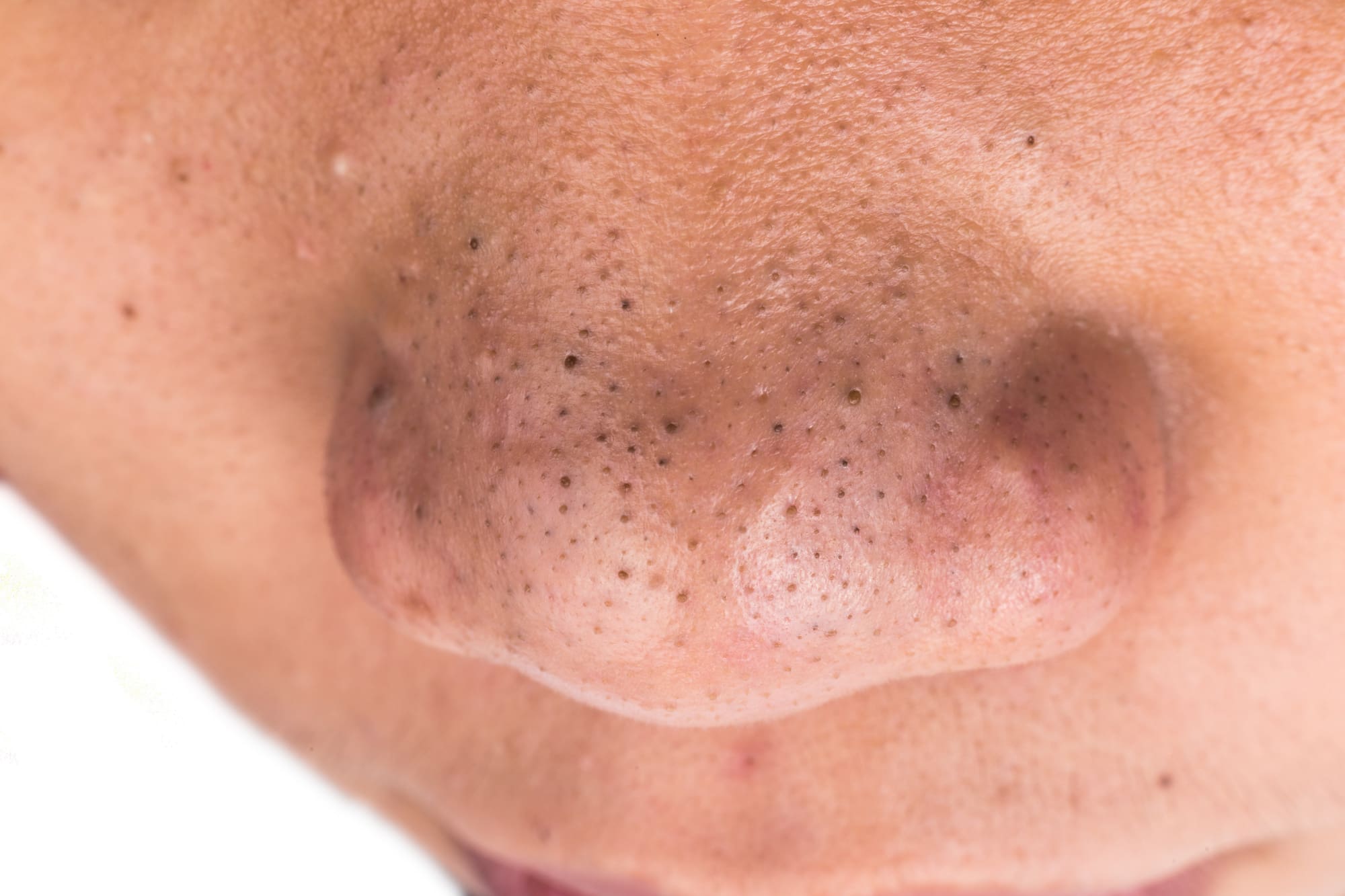
Blackheads, also known as open comedones, develop when the clogged pore remains open at the skin’s surface.
Because the blockage is exposed to air, it undergoes oxidation, causing the surface to turn dark. Contrary to popular belief, this dark colour isn’t dirt trapped inside your pores. It’s simply a natural chemical reaction, much like how a sliced apple turns brown when exposed to air.
Blackheads usually appear as small, flat dark spots and are most common on the nose, forehead and chin where oil production tends to be higher.
What Are Whiteheads?
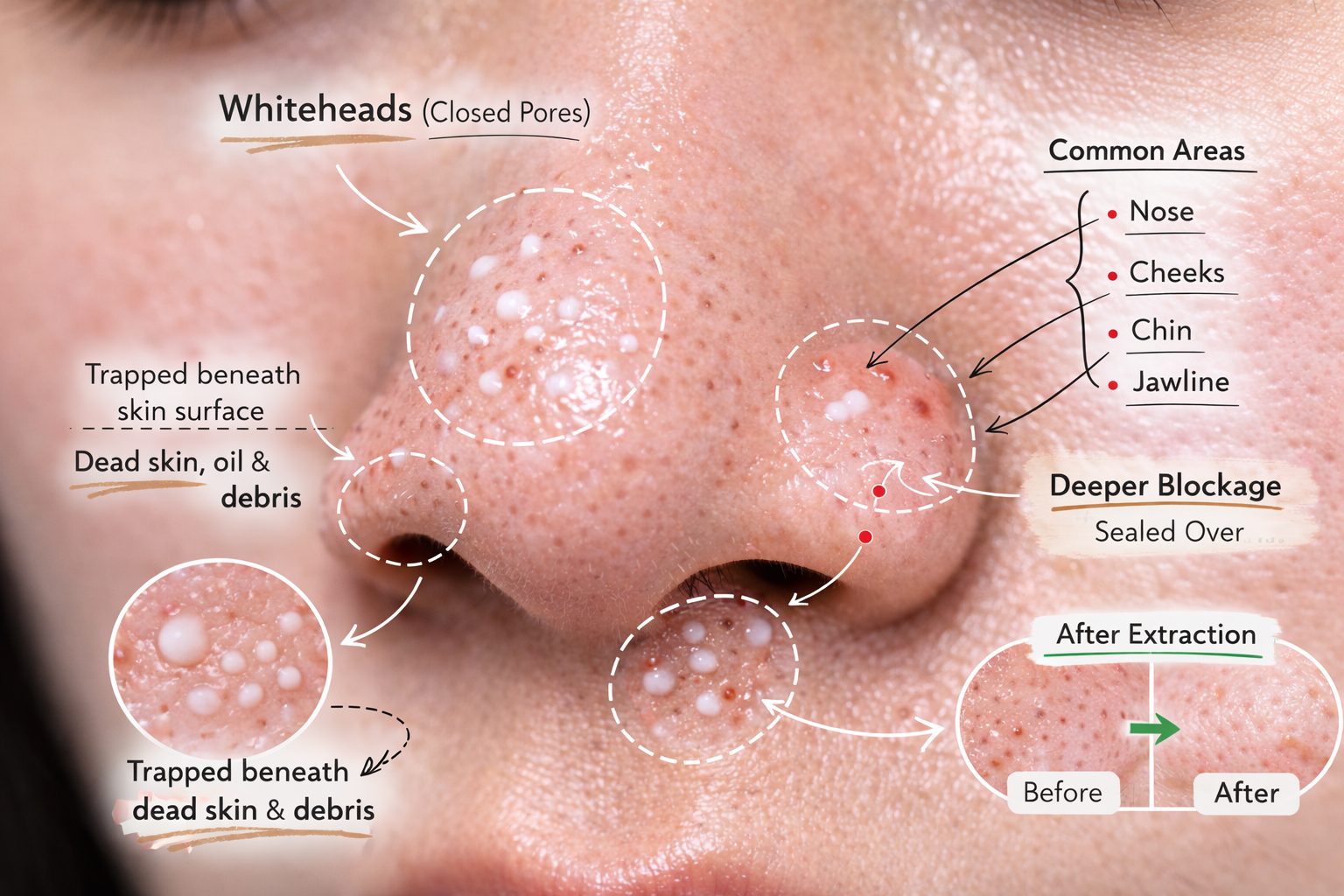
Whiteheads, or closed comedones, begin the same way but remain covered by a thin layer of skin.
Since the blockage isn’t exposed to oxygen, it doesn’t oxidise or turn black. Instead, it appears as a tiny white or flesh-coloured bump beneath the surface of the skin.
Whiteheads often feel slightly raised when you run your fingers across the skin and can sometimes persist for weeks if the blockage isn’t able to clear naturally.
Why Do Some People Get More Blackheads Than Others?
While anyone can develop clogged pores, some people are naturally more prone to blackheads and whiteheads.
Common contributing factors include:
- Naturally oily skin
- Hormonal fluctuations
- Dead skin cell build-up
- Heavy or pore-clogging cosmetics
- Inadequate cleansing after sunscreen or makeup
- Singapore’s hot and humid climate
- Genetics
Often, it’s a combination of these factors rather than a single cause that leads to persistent congestion.
Are Blackheads Easier to Treat Than Whiteheads?
Many people assume blackheads are more stubborn simply because they’re easier to see. Interestingly, that’s not always true.
Because blackheads have an open surface, some skincare ingredients—particularly salicylic acid—can penetrate the pore more effectively and gradually loosen the blockage.
Whiteheads, on the other hand, remain sealed beneath the skin. This can sometimes make them slower to resolve naturally and more difficult to extract without professional treatment.
The good news is that both usually respond well to a combination of consistent home care and professional extraction when necessary.
Can You Remove Blackheads and Whiteheads at Home?
One of the most common skincare questions is whether it’s safe to remove blackheads and whiteheads yourself.
The answer is yes—but with some caution. Not every clogged pore needs to be squeezed, and attempting to extract congestion without the proper technique can sometimes do more harm than good. Using excessive pressure may damage the surrounding skin, introduce bacteria into the pore or increase the risk of inflammation, scarring and post-inflammatory pigmentation.
This is especially true for whiteheads, which sit beneath a thin layer of skin. Trying to force them out before they’re ready often pushes the blockage deeper or irritates the surrounding tissue.
Instead, the focus at home should be on preventing new congestion from forming. Gentle cleansing, regular chemical exfoliation with ingredients such as salicylic acid or retinoids where appropriate, and using non-comedogenic skincare products can all help reduce clogged pores over time.
If blackheads or whiteheads persist despite a consistent routine, professional extraction may be a safer and more effective option.
Common Mistakes That Make Blackheads and Whiteheads Worse
Many people unintentionally make congestion worse while trying to improve it.
One of the biggest mistakes is over-cleansing. When skin feels oily, it’s tempting to wash your face several times a day or use harsh cleansers that leave the skin feeling tight. However, stripping away too much natural oil can disrupt the skin barrier, causing the skin to produce even more sebum in response.
Another common mistake is using too many exfoliating products at once. Combining scrubs, exfoliating acids, retinol and cleansing brushes may seem like an effective way to unclog pores, but excessive exfoliation often leads to irritation rather than clearer skin.
Picking at blackheads and whiteheads is another habit that’s difficult to resist. While it may feel satisfying in the moment, repeated squeezing can damage the surrounding skin and increase the risk of redness, infection and long-lasting marks.
It’s also worth remembering that not every tiny bump is a blackhead or whitehead. Conditions such as sebaceous filaments, milia and enlarged pores can look similar but require different approaches. Treating the wrong concern with aggressive extraction or harsh products may leave the skin irritated without addressing the underlying issue.
Why Do Blackheads and Whiteheads Keep Coming Back?
One of the most frustrating aspects of clogged pores is that they often seem to return, even after you’ve successfully removed them.
This happens because extraction removes the existing blockage, but it doesn’t stop your skin from continuing to produce oil or shed dead skin cells. If the underlying factors remain the same, the pore can gradually become clogged again.
For some people, hormones increase oil production. Others naturally have larger pores that are more prone to congestion. Climate also plays a role. Singapore’s heat and humidity encourage perspiration and increased sebum production, making clogged pores a common concern throughout the year.
Lifestyle habits can contribute as well. Sleeping with makeup on, not removing sunscreen thoroughly, using pore-clogging cosmetics or frequently touching your face can all encourage congestion to build up over time.
This is why managing blackheads and whiteheads isn’t about finding a single miracle product. It’s about creating a routine that consistently supports healthy skin while addressing your individual triggers.
What We’ve Learned After Treating Congested Skin for More Than 15 Years
At My Cozy Room Beauty Spa, one of the most common concerns we see is persistent congestion.
Many clients tell us they’ve tried pore strips, extraction tools purchased online or countless skincare products before deciding to seek professional help. While some products may temporarily improve the appearance of blackheads, they often don’t fully address deeper congestion or prevent it from returning.
We’ve also found that many people aren’t actually dealing with blackheads alone. It’s common to see a combination of blackheads, whiteheads, enlarged pores, dehydrated skin and occasional inflammatory acne all at the same time. Treating just one concern without considering the overall health of the skin rarely produces lasting improvements.
Another observation is that consistency almost always outperforms intensity. Clients who achieve the healthiest long-term results are usually those who follow a simple, personalised skincare routine and schedule regular maintenance treatments, rather than constantly changing products or aggressively trying to remove every blockage themselves.
Healthy skin isn’t about eliminating every visible pore. It’s about reducing congestion, maintaining a strong skin barrier and creating an environment where breakouts become less frequent over time.
How My Cozy Room Treats Blackheads and Whiteheads
At My Cozy Room Beauty Spa, treating blackheads and whiteheads goes beyond simply removing what’s visible on the surface.
Our Ultimate Pore Extraction Facial begins with carefully preparing the skin through cleansing, exfoliation and softening treatments that loosen congestion before manual extraction begins. This allows clogged pores to be cleared more effectively while reducing unnecessary pressure on the skin.
Our experienced therapists assess the condition of your skin during every appointment. Rather than trying to remove every blockage at all costs, we focus on treating congestion safely while protecting the surrounding skin and minimising irritation.
Following extraction, soothing treatments help calm redness, replenish hydration and support the skin’s natural recovery. Clients also receive personalised skincare recommendations based on their skin type, lifestyle and concerns, helping them maintain clearer skin between appointments.
By combining professional extraction with consistent home care, our goal is not only to improve the appearance of blackheads and whiteheads today but also to reduce recurring congestion over the long term.
Frequently Asked Questions about Blackheads vs Whiteheads
Are blackheads caused by dirt?
No. Although blackheads appear dark, the colour isn’t caused by dirt. It develops when the material inside an open clogged pore reacts with oxygen, causing oxidation.
Are whiteheads harder to remove than blackheads?
They can be. Because whiteheads are covered by a thin layer of skin, they’re often less accessible than blackheads and may require more careful extraction.
Do pore strips permanently remove blackheads?
Pore strips can remove some surface debris and temporarily improve the appearance of blackheads, but they don’t prevent new blockages from forming. Many people find that blackheads gradually return after using them.
Can moisturiser cause blackheads?
Not necessarily. Using a moisturiser that is suitable for your skin type helps maintain a healthy skin barrier. However, very rich or pore-clogging products may contribute to congestion in some individuals.
How often should I have professional extraction facials?
The ideal frequency depends on your skin type and the amount of congestion present. Clients with persistent blackheads or whiteheads may benefit from more regular treatments initially before transitioning to a maintenance schedule recommended by their therapist.
Final Thoughts
Blackheads and whiteheads may look different, but they share the same underlying cause: pores that have become clogged with excess oil and dead skin cells. Understanding how they form is the first step towards treating them effectively and avoiding common mistakes that can make congestion worse.
Rather than relying on harsh scrubs, repeated squeezing or quick fixes, long-term improvement comes from combining the right home skincare routine with professional care when needed. By focusing on prevention as well as treatment, you can reduce recurring congestion while maintaining healthier, more balanced skin.
At My Cozy Room Beauty Spa, we believe that clearer skin isn’t achieved by aggressively removing every blackhead or whitehead in a single session. It’s built through personalised treatments, thoughtful skincare advice and consistent care that supports your skin’s health for the long term.

My Cozy Room is thrilled to share that our Ultimate Pore Extraction Facial has been crowned the Reader’s Choice Award Winner at the Beauty Insider Spa & Salon Awards 2025. Organised by Beauty Insider Singapore, the Spa & Salon Awards celebrate excellence in the beauty and wellness industry across Singapore and the region. Each award recognises treatments that stand out for their innovation, proven results, exceptional client satisfaction, and overall spa experience.
FIRST-TIME CUSTOMERS enjoy the award-winning Ultimate Pore Extraction Facial for only $144 (U.P. $338).
Exclusively for Singaporeans, PRs, and valid pass holders. Price is before 9% GST.
WhatsApp 8666 0030to book your appointment today!
First-Trial Special Offer!
Keep up with My Cozy Room’s latest updates and promotions by following us on our social media pages:
Facebook | Instagram | Youtube | Lemon8