
 Cart
Cart




Most people who struggle with recurring acne eventually notice that their breakouts aren’t evenly distributed across the face. One area seems to cause more trouble than the others. It might be a nose that is almost permanently dotted with blackheads, a forehead that develops tiny bumps every few weeks, or a chin that becomes noticeably worse at certain times of the month. Naturally, we start wondering why.
Acne face mapping has become one of the more popular explanations. Traditional versions divide the face into zones and associate each area with different aspects of internal health, which is why you may have heard claims that forehead acne is related to digestion or that chin breakouts indicate hormonal changes.
There is a long history behind some of these ideas, but modern acne research doesn’t support using the location of a breakout to diagnose the health of a particular organ. Still, the fact that acne repeatedly appears in certain areas isn’t completely meaningless. Different parts of the face vary in oil production and are exposed to different products, habits and environmental factors. Hormonal changes can also influence the distribution of acne, particularly around the lower face.
For that reason, paying attention to where you break out can be useful, provided it forms part of a wider look at your skin rather than becoming a diagnosis in itself.
About This Guide
This guide takes a closer look at acne face mapping and some of the reasons breakouts tend to favour certain areas of the face. We’ll cover forehead, cheek, nose, chin, jawline and mouth-area acne, along with the differences between blackheads, whiteheads and more inflamed breakouts.
We’ll also look at the everyday factors that are easily missed when people are trying to understand their acne, including haircare, makeup, sunscreen, cleansing habits, hormonal fluctuations and the tendency to use increasingly aggressive skincare when congestion appears.
For persistent, painful or scarring acne, however, a face map shouldn’t take the place of proper medical assessment.
Who Is This Guide For?
This guide is intended for anyone who has noticed a recurring pattern to their breakouts and wants to understand what may be contributing to it.
Perhaps your forehead is the only area that regularly becomes bumpy, your nose seems to refill with blackheads no matter what you do, or you repeatedly develop deeper spots around the chin and jawline. You may also have encountered traditional acne face maps online and wondered how much weight to give their explanations.
Understanding the location can be helpful, but it becomes considerably more useful when considered alongside the type of acne, how frequently it returns and what else is happening with your skin at the time.
Key Takeaways
- Traditional acne face maps shouldn’t be used to diagnose the health of specific organs.
- Breakout location can still provide useful information about how different areas of your skin behave.
- The forehead and nose are naturally more prone to oiliness and congestion in many people.
- Haircare and styling products can contribute to breakouts around the forehead and hairline.
- Recurring chin and jawline acne can sometimes coincide with hormonal fluctuations.
- Makeup, sunscreen, skincare and regular contact with the skin may contribute to breakouts in certain areas.
- The type of acne is important when deciding how it should be treated.
- Professional extraction can be useful for suitable blackheads and whiteheads, while painful, cystic or scarring acne may require medical care.
How Much Can Acne Face Mapping Really Tell You?
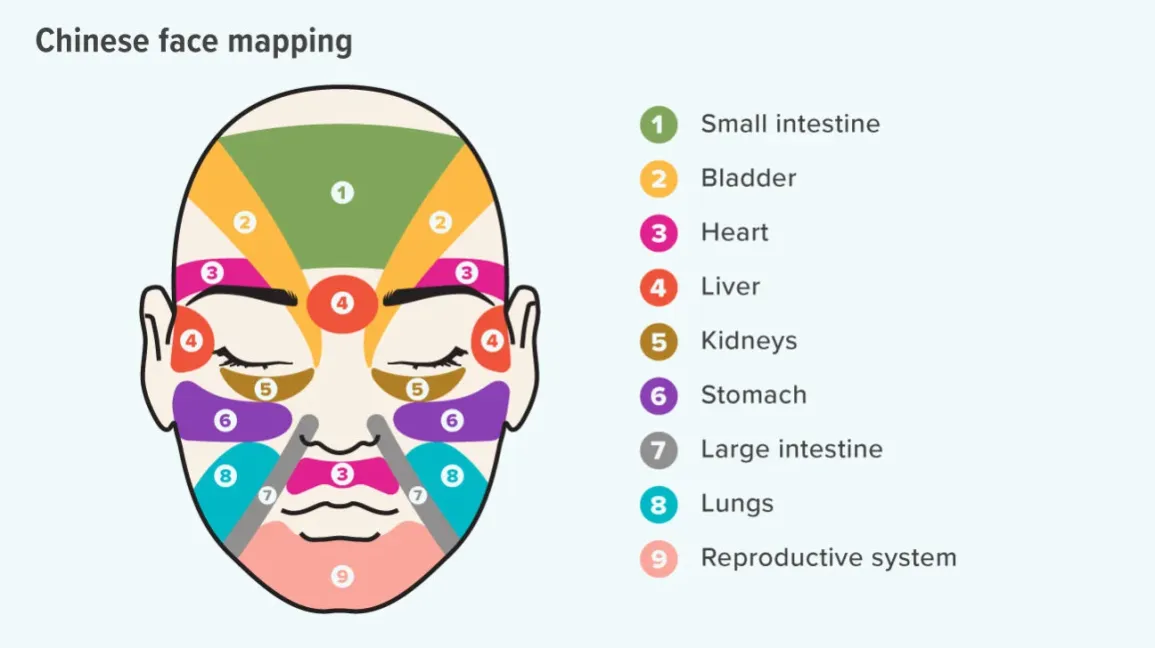
Traditional acne face maps can be very detailed. Depending on which version you read, almost every section of the face is assigned to a different organ or bodily system. These interpretations are often presented with considerable confidence, which can make them sound more medically established than they are.
There isn’t enough scientific evidence to conclude that a breakout on your forehead indicates poor digestion, for example, or that acne on a particular cheek reveals the condition of another part of your body. Acne itself has much better-understood causes, including clogged follicles, sebum production, inflammation and hormonal influences.
Where face mapping becomes more relevant to everyday skincare is in recognising that the face isn’t one completely uniform surface. The nose and forehead tend to be oilier for many people, the hairline is regularly exposed to haircare products, and the cheeks come into contact with everything from makeup brushes to phones and pillowcases. The chin and jawline can also be affected by hormonal changes, particularly in adult women.
Looking at the distribution of your acne alongside these factors can therefore help narrow down possible contributors, especially when the same pattern continues over several weeks or months.
What Acne on Different Areas of the Face May Mean
Forehead Acne
The forehead is one of the most common areas for congestion, particularly among people with an oily T-zone. Sebum, dead skin cells, sunscreen and other products can accumulate within the pores, leading to blackheads, whiteheads and small pimples.
Haircare is another factor worth considering. Conditioner, styling cream, hair oils and leave-in treatments can easily make their way onto the forehead, particularly around the hairline. If you wear a fringe, the combination of hair products, natural scalp oils and perspiration can remain in contact with the skin for much of the day.
Singapore’s climate adds another layer to this. A humid commute or outdoor lunch can leave the forehead noticeably sweaty, while much of the rest of the day may be spent in air-conditioning. For someone already prone to congestion, the forehead can consequently require a little more attention than the cheeks.
If the area has suddenly started breaking out, it can be useful to think back over the previous few weeks. Changes to haircare, sunscreen, makeup or exercise habits are all worth considering before drawing conclusions about internal health.
Cheek Acne
Cheek breakouts tend to be less straightforward because this area is affected by such a wide range of factors. Makeup, sunscreen and moisturiser are obvious possibilities, but the cheeks also come into contact with phones, hands, pillowcases, makeup tools and anything worn against the face.
When acne is noticeably worse on one cheek, looking at these habits can occasionally reveal something useful. Someone who regularly holds a phone against the same side of the face, for instance, has a different pattern of contact from someone whose acne is evenly distributed across both cheeks.
Cosmetics can also contribute to clogged pores in people who are susceptible to them. This doesn’t mean that makeup itself is inherently bad for acne-prone skin, but formulas vary considerably, and a product that suits one complexion may feel too heavy for another. If cheek acne appeared around the same time as a change in foundation, sunscreen or moisturiser, it is reasonable to consider whether the two may be connected.
At the same time, cheek acne can occur without an obvious external trigger. Genetics, hormones, inflammation and the general tendency of someone’s skin to clog all have a role, which is why changing pillowcases every night isn’t necessarily going to solve a persistent acne problem.
Why Blackheads Keep Appearing on the Nose
The nose is particularly prone to visible pores, blackheads and sebaceous filaments because it contains a relatively high concentration of sebaceous glands. For someone with an oily or combination complexion, it may become congested much more quickly than the surrounding skin.
One common misconception is that the dark colour of a blackhead means dirt has become trapped inside the pore. Blackheads are open comedones, and their characteristic colour develops when the contents of the pore are exposed to air. This explains why washing the nose more aggressively often produces disappointing results.
Frequent scrubbing and pore strips can make the surface temporarily feel smoother, but they don’t necessarily address how readily the area becomes congested. A routine that includes appropriate cleansing and exfoliation is generally more useful for ongoing maintenance, while established blackheads and whiteheads may sometimes benefit from careful professional extraction.
It is also worth distinguishing genuine blackheads from sebaceous filaments. The latter are a normal part of the skin and are especially visible on the nose. Even when cleared, they naturally become visible again because the sebaceous glands continue doing their job.
Chin and Jawline Acne
Lower-face acne has become strongly associated with hormones, and there is some basis for paying attention to that relationship. Hormonal fluctuations can affect sebum production and acne, and some women notice that deeper breakouts around the chin and jawline appear at a similar point in their menstrual cycle.
The timing is therefore just as relevant as the location. A single chin pimple doesn’t tell you very much about your hormones, whereas a similar flare that develops month after month may be worth discussing with a doctor if it is persistent or troublesome.
Ordinary congestion can occur along the chin and jawline as well. Sunscreen, makeup and skincare are applied to these areas every day, and the chin in particular can develop blackheads and whiteheads in people who are generally prone to clogged pores.
Looking closely at the type of breakout helps here. Several small comedones along the chin are quite different from recurrent, deep and painful inflammatory acne, even though both appear within the same facial zone.
Acne Around the Mouth
The skin surrounding the mouth is exposed to an unusually large number of products throughout the day. Lip balms and lipsticks extend beyond the lips, facial skincare is applied around them, and sunscreen and foundation often overlap with both. Food, drinks and frequent touching add to the number of variables.
When small clogged bumps appear around this area, it can be worth reviewing anything that has recently been introduced to your lip or skincare routine. Rich lip products in particular are easily overlooked because most people don’t think of them as part of their facial skincare.
Persistent irritation around the mouth needs a little more caution. Several skin conditions can resemble acne, and continuing to apply stronger acne treatments to an area that is already irritated may make matters worse. If the bumps look or behave differently from your usual breakouts, professional assessment is more useful than assuming they are simply another form of acne.
Why the Type of Breakout Matters
Face mapping tends to place most of its attention on geography, but two people breaking out in exactly the same area may have very different skin concerns.
Blackheads and whiteheads develop when pores become clogged and are generally described as comedonal acne. These are the types of congestion most relevant when we’re talking about pore cleansing and professional extraction.
Inflamed papules, pustules, nodules and cystic breakouts behave differently. They may be tender or painful and involve considerably more inflammation, so treating them as though they are simply stubborn blackheads that need to be squeezed can cause unnecessary trauma to the skin.
This is why looking closely at the breakout itself is important before deciding what to do about it. Location can add context, but the condition of the skin and the type of lesion usually tell us more about the appropriate next step.
Why Acne Can Keep Returning to the Same Area
It is very common for clients to say that their blackheads or breakouts “always come back in the same place”, and there is usually nothing mysterious about this. The characteristics that made an area prone to congestion in the first place don’t disappear once a blemish clears.
An oily nose continues producing sebum. Hair products may continue reaching the forehead. Hormonal fluctuations recur. A foundation that contributes to congestion is still being worn several times a week. Even natural differences in sebaceous activity across the face mean some areas simply clog more readily than others.
This is where watching your skin over time becomes particularly useful. The speed at which congestion returns, whether the same type of breakout keeps appearing and whether a change in your routine alters that pattern can all provide information that a single snapshot of the complexion cannot.
It May Be Worth Keeping a Breakout Diary
For recurring acne, a simple photographic record can make patterns much easier to see. Take a photograph when the skin flares and note any recent changes to skincare, makeup, sunscreen or haircare. You don’t need to record every small pimple or inspect your complexion daily.
For women who suspect their chin or jawline breakouts follow a hormonal pattern, recording where the flare falls within the menstrual cycle for two or three months can also be useful. What seems random when you’re dealing with each breakout individually may look rather different when several months are viewed together.
The purpose isn’t to monitor every fluctuation in your complexion. It is simply to have something more reliable than memory when you’re trying to work out whether a particular trigger really does appear repeatedly alongside your acne.
Be Careful About Over-Cleansing Breakout-Prone Areas
Once an area becomes visibly oily or congested, there is a natural tendency to concentrate more cleansing and exfoliation there. Someone frustrated by forehead acne may start washing three times a day, while persistent nose blackheads can lead to a rotation of scrubs, pore strips, clay masks and exfoliating acids.
This can become counterproductive when the skin is being stripped faster than it can comfortably recover. Acne-prone complexions still need a functioning skin barrier, and excessive cleansing can leave the skin tight, flaky and increasingly sensitive without necessarily resolving the congestion underneath.
A gentle cleanser used consistently is generally a better foundation than repeatedly trying to achieve a squeaky-clean feeling. If you wear makeup or sunscreen, paying attention to thorough removal in the evening is sensible, but there is rarely a need to scrub the skin aggressively.
This is particularly relevant in Singapore because an oily surface doesn’t necessarily mean the skin underneath is well hydrated. It is entirely possible to have a shiny T-zone and still be dealing with dehydration.
Can a Facial Help With Recurring Acne?
The answer depends largely on what you mean by acne.
When the main concern is blackheads, whiteheads and clogged pores, professional extraction can be useful because the skin can be prepared properly before suitable congestion is removed. For people who repeatedly squeeze their own pores at home, having this done professionally can also reduce some of the unnecessary picking and pressure applied to the skin.
Inflamed acne needs more restraint. A painful pimple that hasn’t formed an extractable blockage shouldn’t be forced simply because it is visible, and widespread inflammatory or cystic acne isn’t something that should be managed through increasingly intensive extraction facials.
This distinction is important when choosing a facial. A treatment designed primarily around clearing congestion is most relevant when congestion is actually the problem.
Our Approach to Acne and Congested Skin at My Cozy Room
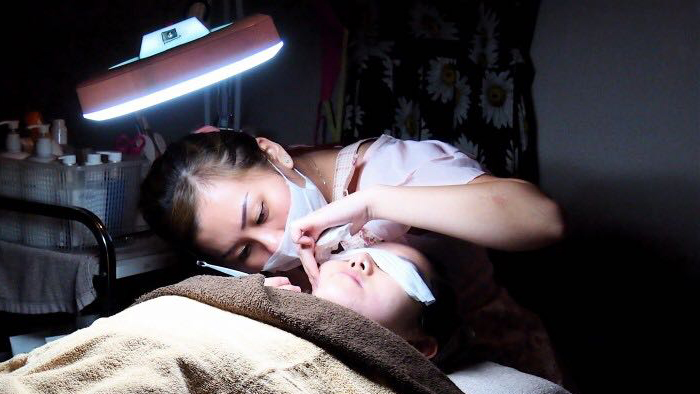
When clients come to My Cozy Room with recurring breakouts, we begin by looking at the overall condition of the complexion rather than concentrating only on where the acne appears. Someone may have significant blackheads around the nose and chin but relatively comfortable skin elsewhere, while another client who describes themselves as “congested” may actually have very little to extract and a complexion that has become dehydrated from an overly intensive home routine.
For blackheads, whiteheads and clogged pores, our Ultimate Pore Extraction Facial includes skin preparation before careful manual extraction, followed by soothing and hydrating care. The amount of extraction varies according to what is actually present, and inflamed areas that aren’t suitable for extraction are treated with considerably more caution.
With clients we see regularly, the changes between appointments are particularly useful. We can see whether congestion is returning as quickly as before, whether certain areas remain clearer for longer and whether adjustments to home care appear to be helping. Over time, that gives us a much better understanding of the complexion than assigning every new breakout to a particular facial zone.
When Acne Should Be Assessed by a Dermatologist
Professional facials are most relevant to everyday concerns such as blackheads, whiteheads, congestion and general skin maintenance. Persistent inflammatory acne falls into a different category, particularly when breakouts are deep, painful or beginning to leave scars.
If acne is becoming more severe, hasn’t responded to an appropriate skincare routine or is affecting large areas of the face, seeking medical advice early can also help reduce the risk of longer-term scarring and pigmentation.
An assessment is equally worthwhile when you’re unsure whether the bumps you’re treating are actually acne. Several skin conditions can resemble it, and repeatedly experimenting with stronger exfoliants or acne products can further irritate a complexion that needs an entirely different approach.
Frequently Asked Questions About Acne Face Mapping
What is acne face mapping?
Acne face mapping looks at the distribution of breakouts across the face and considers whether their location offers clues about possible contributing factors. Traditional versions associate facial zones with internal organs, while contemporary skincare tends to focus more on factors such as oil production, hormonal changes, products and contact with the skin.
Is acne face mapping scientifically accurate?
There isn’t strong evidence supporting the traditional idea that acne in a particular facial zone indicates a problem with a corresponding internal organ. Breakout location can nevertheless be useful when considered alongside the type of acne, timing and possible external triggers.
What causes forehead acne?
The forehead is naturally oilier in many people and can be prone to blackheads, whiteheads and other forms of congestion. Sweat, hair products, sunscreen and anything regularly sitting against the forehead may also contribute.
Does forehead acne mean I have digestive problems?
A forehead breakout isn’t enough to conclude that there is a digestive problem. When forehead acne develops, factors directly affecting the skin, including oil production, products and perspiration, are usually more practical places to begin investigating.
Why do I always get blackheads on my nose?
The nose has a high concentration of sebaceous glands and tends to become oily easily, which makes blackheads and visible sebaceous filaments particularly common there. The dark appearance of blackheads is caused by oxidation rather than dirt.
What causes cheek acne?
Cheek acne can have several contributing factors, including the usual biological causes of acne as well as cosmetics, skincare and repeated contact with the area. If one cheek is consistently worse, it may be worth considering whether anything regularly touches that side of your face.
Is chin and jawline acne hormonal?
Hormonal changes can contribute to lower-face acne, and some women notice recurring chin and jawline breakouts around their menstrual cycle. Location by itself, however, isn’t sufficient to diagnose a hormonal imbalance.
Can professional extraction help with acne?
Professional extraction can be helpful for suitable blackheads and whiteheads. Inflamed, painful or cystic acne requires a different approach and shouldn’t automatically be squeezed or extracted.
Can stress make acne worse?
Stress can contribute to acne flares in some people, although it doesn’t correspond to one particular area of the face. Looking at whether breakouts repeatedly worsen during stressful periods is more useful than trying to identify a specific “stress zone”.
Should I change my diet because of where I break out?
The location of a breakout isn’t a reliable way to determine which foods you should avoid. If you suspect diet may be influencing your acne, observing consistent changes over time and discussing significant concerns with an appropriate healthcare professional is more useful.
When should I see a dermatologist for acne?
Persistent, painful, cystic or scarring acne should be medically assessed, particularly when it isn’t improving with appropriate skincare. It is also worth seeking advice if you’re uncertain whether the condition you’re treating is actually acne.
What Your Breakouts Can Actually Tell You
The useful part of acne face mapping is much simpler than many of the charts circulating online suggest. Looking at where breakouts occur can help you notice that your forehead became congested after changing hair products, that the nose clogs considerably faster than the cheeks, or that lower-face acne tends to worsen at a similar time each month.
Those observations become more valuable when they’re considered alongside the type of acne and what has been happening to the skin in the weeks leading up to a flare. Over time, you may be able to identify habits or products worth changing, recognise when congestion needs professional attention or realise that a persistent acne problem deserves a dermatologist’s assessment.
Skin doesn’t always provide a tidy explanation for why it breaks out, and sometimes there isn’t one trigger to find. Acne is influenced by several factors at once. Paying attention to recurring behaviour can still help you understand your own complexion better, without expecting the location of every pimple to explain what is happening elsewhere in your body.
Try Our Award-Winning Extraction Facial Today!

My Cozy Room is thrilled to share that our Ultimate Pore Extraction Facial has been crowned the Reader’s Choice Award Winner at the Beauty Insider Spa & Salon Awards 2025. Organised by Beauty Insider Singapore, the Spa & Salon Awards celebrate excellence in the beauty and wellness industry across Singapore and the region. Each award recognises treatments that stand out for their innovation, proven results, exceptional client satisfaction, and overall spa experience.
FIRST-TIME CUSTOMERS enjoy the award-winning Ultimate Pore Extraction Facial for only $144 (U.P. $338).
Exclusively for Singaporeans, PRs, and valid pass holders. Price is before 9% GST.
WhatsApp 8666 0030 to book your appointment today!
Keep up with My Cozy Room’s latest updates and promotions by following us on our social media pages:
Facebook | Instagram | Youtube | Lemon8
📲 WhatsApp us at 8666 0030 to schedule your appointment.