 Cart
Cart


If you’ve ever looked closely at your skin after a breakout, you’ve probably realised that acne doesn’t always look the same.
Some blemishes appear as tiny white bumps beneath the surface. Others develop into stubborn blackheads that never seem to disappear, no matter how diligently you cleanse your face. Then there are the angry, inflamed pimples that feel sore to the touch and seem determined to linger for weeks.
It’s easy to group them all under the umbrella of “acne”, but they’re actually very different skin concerns. More importantly, they don’t all respond to the same type of treatment.
This is one of the biggest misconceptions surrounding extraction facials. Many people assume every spot should be squeezed during a facial, or that a thorough treatment simply means removing as much congestion as possible. In reality, experienced therapists know that different types of acne require different approaches. Some blemishes can be extracted safely, while others are better left alone until the inflammation has settled.
Understanding that difference is one of the reasons why some extraction facials leave the skin looking calm and refreshed, while others leave it feeling irritated and overworked.
About This Guide
Professional extractions can play an important role in managing acne, but they’re rarely a one-size-fits-all treatment. The type of blemish, the level of inflammation and even the condition of your skin barrier all influence how a therapist approaches the treatment.
This guide explains the different types of acne commonly seen during facials, which blemishes are suitable for extraction, and why a personalised approach often produces better results than trying to extract everything in a single session.
Who Is This Guide For?
This guide is ideal if you experience recurring acne, blackheads or clogged pores and are considering a professional extraction facial. It’s also useful if you’ve wondered why some pimples were extracted during your facial while others were left untouched, or if you’ve had uncomfortable extraction experiences in the past and want to understand why treatment techniques can vary so much.
Key Takeaways
- Not all acne should be extracted during a facial.
- Blackheads and whiteheads are often suitable for professional extraction, while inflamed acne usually requires a gentler approach.
- Different types of acne develop for different reasons and should be treated accordingly.
- Thorough skin preparation before extraction helps reduce discomfort and unnecessary trauma.
- An experienced therapist knows that protecting the skin is just as important as clearing congestion.
Blackheads: The Most Common Reason People Book an Extraction Facial
For many clients, blackheads are the first thing they notice when they look in the mirror.
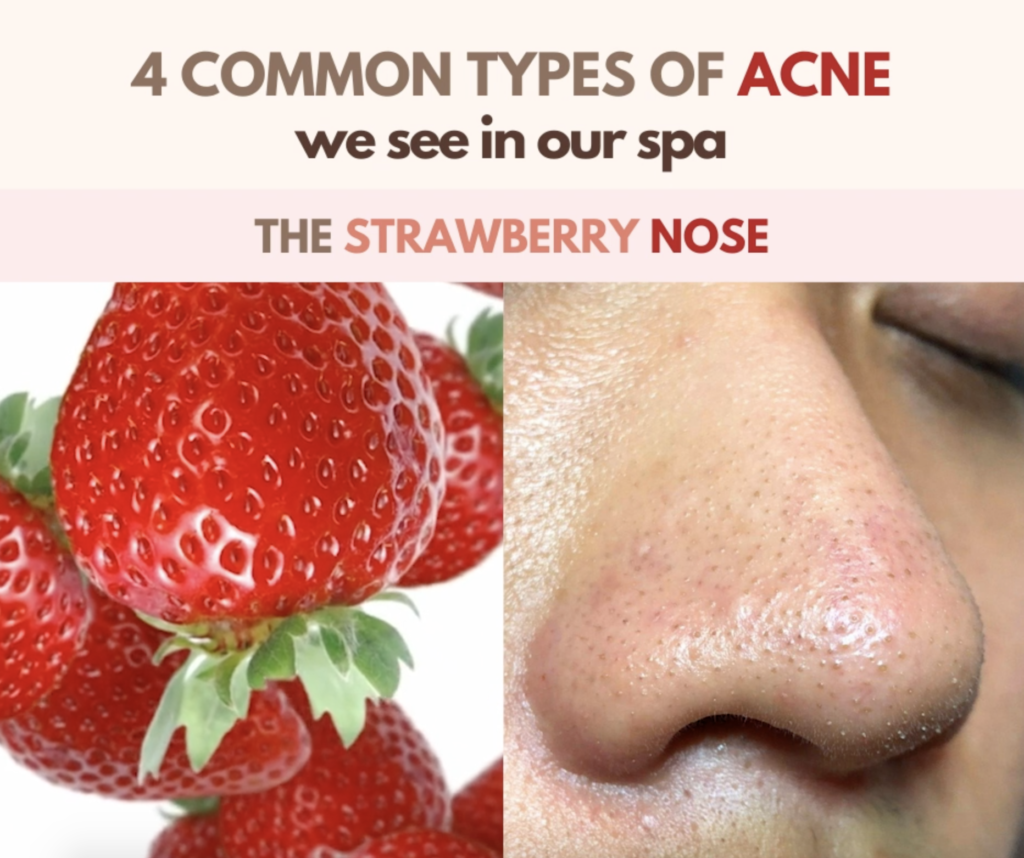
They’re particularly common around the nose, chin and forehead, where the skin naturally produces more oil. Despite their dark appearance, blackheads aren’t caused by dirt. They’re open pores filled with excess sebum and dead skin cells that have oxidised after being exposed to air.
Because the pore remains open, blackheads are often one of the easiest types of congestion to remove professionally. When the skin has been properly cleansed and softened beforehand, they can usually be extracted with minimal pressure, leaving the skin looking noticeably smoother.
That said, not every blackhead disappears in a single appointment. Areas with years of built-up congestion often respond better to regular maintenance than one aggressive treatment.
Whiteheads Often Require More Patience
At first glance, whiteheads may seem very similar to blackheads. After all, they’re both caused by clogged pores.
The difference is that a whitehead remains sealed beneath the skin. Because the opening of the pore is still closed, the trapped oil and dead skin cells aren’t exposed to the air, which is why they stay white or flesh-coloured instead of developing the darker appearance associated with blackheads.
This seemingly small difference changes how they’re treated during a facial.
Unlike blackheads, which can often be removed once the skin has been properly prepared, whiteheads aren’t always ready for extraction. Trying to force them out too early can place unnecessary stress on the surrounding skin and increase the likelihood of redness or irritation afterwards.
An experienced therapist will assess each whitehead individually rather than assuming every blockage should be removed during the same appointment. Sometimes the best decision is to leave a blemish alone and allow it to mature naturally before extracting it at a later treatment.
In professional skincare, knowing when to wait is often just as important as knowing when to extract.
Not Every Inflamed Pimple Should Be Squeezed
This is often the biggest misconception people have before their first extraction facial.
Many assume that a successful treatment means every visible pimple has been removed by the end of the appointment. In reality, that’s rarely how experienced therapists approach acne-prone skin.
Red, swollen or painful pimples are already inflamed, which means the skin is working hard to heal itself. Applying pressure too soon can aggravate the area, increase irritation and make recovery take even longer. In some cases, it may also increase the likelihood of post-inflammatory pigmentation or acne scarring, particularly if the blemish isn’t ready to be extracted.
Instead of focusing on removing every spot, a good therapist looks at what will benefit the skin overall. Some inflamed blemishes respond better to treatments that calm irritation and support healing, while others simply need more time before they can be extracted safely.
For first-time clients, it can be surprising to hear that leaving a pimple alone is sometimes the better option. But professional extractions aren’t about removing as many blemishes as possible—they’re about improving the skin without creating unnecessary trauma along the way.
A Good Extraction Is Never One-Size-Fits-All
People sometimes assume that professional extractions follow a fixed routine, as though every blackhead, whitehead or breakout should be treated in exactly the same way.
In reality, every appointment is different because every client’s skin is different.
One person may have years of stubborn congestion around the nose that can be removed quite comfortably once the skin has been properly prepared. Another may have only a few whiteheads, but extremely sensitive skin that becomes red very easily. Some clients recover quickly after extractions, while others benefit from a gentler, more gradual approach.
This is why a good therapist isn’t simply focused on technique. They’re constantly observing how the skin responds throughout the treatment, deciding where extractions will be most beneficial, where a lighter touch is needed, and when it’s better to leave a blemish for another day.
Ultimately, professional extractions aren’t about removing as much congestion as possible. They’re about improving the skin while protecting its natural barrier, because the healthiest results are achieved when the skin is treated with care rather than force.
The Best Extractions Start Before the Therapist Removes a Single Blackhead
When people think about an extraction facial, they usually imagine the moment the therapist begins clearing blackheads and clogged pores. In reality, that’s only one part of the treatment.
Long before the first extraction begins, the skin is carefully prepared. Cleansing removes makeup, sunscreen and excess oil that can interfere with the treatment, while exfoliation helps lift away dead skin cells that keep congestion trapped beneath the surface. Depending on the condition of your skin, pore-softening treatments may also be used to loosen stubborn blockages before any manual extraction takes place.
This preparation isn’t simply an added luxury. It allows congestion to be removed more comfortably and with less pressure, which is often why professional extractions feel very different from trying to squeeze blackheads at home. When the skin has been prepared properly, the treatment is generally gentler, and the skin is often calmer afterwards.
For us, an extraction facial has never been about working quickly. Taking the time to prepare the skin properly is just as important as the extraction itself.
Sometimes the Best Decision Is to Leave a Blemish Alone
One question we hear quite often during treatments is, “Can you remove this one as well?”
It’s a perfectly understandable request, especially when a particular spot has been bothering you for days. However, one of the biggest differences between professional extractions and squeezing your own skin at home is knowing when an extraction is likely to do more harm than good.
Some whiteheads haven’t surfaced enough to be removed comfortably, while inflamed pimples may still be in the middle of the healing process. Trying to force these blemishes can place unnecessary stress on the surrounding skin, increasing the likelihood of redness, irritation and post-inflammatory pigmentation.
Rather than trying to clear every visible blemish in a single appointment, experienced therapists look at the overall condition of your skin and decide which areas can be treated safely. It may feel less satisfying to leave a few spots untouched, but a more measured approach often leads to healthier skin and a smoother recovery in the days that follow.
Every Client’s Acne Tells a Different Story
One thing we’ve learnt over the years is that acne rarely follows a textbook.
Some clients develop congestion almost exclusively around their nose. Others struggle with hormonal breakouts along the jawline every month. Some have very little active acne but persistent blackheads, while others have clear pores yet continue experiencing inflamed pimples.
On the surface, all of these concerns fall under the broad category of acne, but the treatment approach is rarely identical.
That’s why every facial at My Cozy Room begins with understanding what your skin is experiencing today, rather than assuming the same treatment will suit everyone. We take into account your skin condition, your concerns and how your skin responds throughout the appointment before deciding where extractions are appropriate and where a gentler approach would be more beneficial.
How We Treat Acne at My Cozy Room
At My Cozy Room, we’ve always believed that extraction facials should be as thoughtful as they are thorough.
Our Ultimate Pore Extraction Facial was developed to treat congestion without placing unnecessary stress on the skin. Instead of beginning immediately with manual extractions, the treatment carefully prepares the skin through deep cleansing, exfoliation and pore-softening steps that help loosen congestion naturally.
Only then do we begin extracting blackheads, whiteheads and clogged pores that can be removed safely and comfortably. Areas of active inflammation are assessed individually, and where appropriate, we focus on calming rather than forcing the skin.
Once the extractions are complete, the treatment continues with High Frequency therapy, Coolight Therapy, facial massage, crystal eye massage and a premium alginate mask to soothe the skin, replenish hydration and minimise visible redness.
For clients experiencing more active inflammatory acne, we may also recommend our Ultimate Anti-Acne LED Facial, which combines professional acne care with LED light therapy to help calm the skin while supporting its recovery.
Our aim has never been to remove the most congestion in a single visit. It’s to help clients achieve healthier skin through treatments that are personalised, gentle and sustainable over the long term.
Frequently Asked Questions
Should every pimple be extracted during a facial?
No. Some blemishes, particularly inflamed or cystic acne, are better left alone until the inflammation has settled. Attempting to extract them too early can increase irritation and prolong healing.
Are blackheads easier to extract than whiteheads?
Generally, yes. Because blackheads are open pores, they’re often easier to remove once the skin has been properly prepared. Whiteheads remain covered by the skin and usually require greater precision.
Can extractions make acne worse?
When performed professionally and appropriately, extractions shouldn’t worsen acne. Aggressive squeezing or attempting to extract inflamed blemishes, however, can increase irritation and the risk of post-inflammatory pigmentation or scarring.
Why weren’t all my blackheads removed?
Some congestion sits deeper beneath the skin and may require more than one treatment to remove comfortably. A gentle, gradual approach is often healthier for the skin than trying to remove everything in one session.
Which facial is best for acne-prone skin?
This depends on the type of acne you’re experiencing. Clients with blackheads and congestion often benefit from an extraction facial, while those with more active inflammatory acne may be better suited to treatments that also focus on calming inflammation, such as LED therapy.
Final Thoughts
Acne isn’t a single skin condition, and there isn’t a single extraction technique that’s right for every breakout. Blackheads, whiteheads and inflamed pimples each behave differently, which is why experienced therapists approach them differently.
The most effective extraction facial isn’t the one that removes the greatest number of blemishes. It’s the one that understands the skin in front of it, treats congestion with care and leaves the skin healthier than when the appointment began.
Ultimately, that’s what professional skincare should be about. Not forcing the skin to do something it’s not ready for, but working with it to achieve clearer, healthier skin over time.