
 Cart



Acne Scars Explained: Why They Form, How to Prevent Them and What Actually Helps
A breakout may only last a few days, but what it leaves behind can sometimes stay visible for much longer. For some people, it is a flat red or brown mark that gradually fades. For others, acne leaves behind changes in the actual texture of the skin: small pits, wider depressions or, less commonly, raised scars.
These are often grouped together under the term “acne scars”, even though they are not all the same thing.
Understanding that distinction is useful because a dark mark left after a pimple needs a very different approach from an indented acne scar. It also explains why treating active acne early matters. Once the deeper layers of the skin have been damaged and true scarring has formed, skincare and facials can only do so much.
At My Cozy Room, we regularly see clients who are concerned about both ongoing breakouts and the marks left behind by previous acne. Our first priority is usually to understand what is still active, what is congestion that may be suitable for extraction, and what is already a post-acne mark or scar.
About This Guide
This guide explains how acne scars form, the difference between acne marks and true scars, which types of breakouts are more likely to leave lasting damage and what you can do to reduce your risk.
We will also look at where professional acne facials and LED light therapy may fit into an acne-care routine, using an earlier My Cozy Room customer experience from Charmaine as an example.
Who Is This Guide For?
This article may be useful if you have acne-prone skin and notice that every breakout seems to leave something behind, whether that is redness, brown pigmentation or a change in skin texture.
It is also relevant if you find yourself picking or squeezing pimples, have recurring inflammatory acne or are trying to decide whether an acne facial can help with your skin.
If you already have deep ice-pick scars, rolling scars, boxcar scars or raised scars, a dermatologist is better placed to assess treatment options because these are structural changes within the skin.
Key Takeaways
Not every mark left after acne is a scar. Flat red, pink, brown or darker patches are usually post-inflammatory colour changes and often fade over time, while true acne scars involve a change in the skin’s texture.
Deep inflammatory acne, particularly nodules and cysts, carries a higher risk of scarring. Picking, popping and squeezing can increase inflammation and make scarring or post-acne pigmentation more likely.
The most effective way to reduce future acne scarring is to control active acne early rather than waiting until scars have already formed.
Professional facials may help manage suitable blackheads, whiteheads and superficial congestion. LED light therapy may also complement acne care for some inflammatory breakouts, but neither should be presented as a cure for acne or as a replacement for medical scar treatments.
Why Does Acne Leave Marks Behind?
Acne is an inflammatory skin condition. When a follicle becomes blocked and inflamed, the surrounding tissue may also become involved.
With a relatively superficial blemish, the skin may recover without any permanent structural change. You might still see temporary redness or pigmentation where the pimple used to be, but the surface of the skin remains flat.
More severe inflammation can damage deeper skin tissue. The body then has to repair that injury, including producing collagen during the healing process.
If too little collagen is produced during that repair, a depression can remain in the skin. If too much collagen develops, a raised scar may form instead.
This is why a deep, painful acne nodule carries a different scarring risk from a small blackhead.
Acne Marks and Acne Scars Are Not the Same Thing
One of the biggest problems with the phrase “acne scar” is that almost any mark after a breakout tends to get described that way.
There are actually two broad things you may be looking at.
Post-Acne Red or Brown Marks
After inflammation settles, some people are left with a flat area of discolouration.
Depending on your skin tone and how your skin responds to inflammation, this may look pink, red, purple, brown or greyish.
Brown or darker pigmentation is often referred to as post-inflammatory hyperpigmentation, or PIH. These marks can be frustrating because they sometimes remain visible long after the original pimple has disappeared, but they are not the same as permanent acne scars.
Because there is no indentation or raised tissue, the actual structure of the skin has not been altered in the same way.
These marks often fade gradually, although this can take months and occasionally longer.
True Acne Scars
True acne scars involve a permanent change in skin texture.
They can be indented below the skin surface or raised above it. They generally develop when inflammation extends deeper into the skin and the healing process alters the normal collagen structure.
If you can run your fingers across the area and clearly feel depressions or raised tissue, you are probably dealing with more than pigmentation alone.
What Are the Different Types of Acne Scars?
Not all acne scars look alike, and identifying the scar type matters because different scars respond to different medical treatments.
Ice-Pick Scars
Ice-pick scars are narrow but deep depressions that can look almost as though the skin has been punctured with a fine object.
Because they extend quite deeply, they are among the scars that are difficult to address with ordinary topical skincare.
Boxcar Scars
Boxcar scars are wider depressions with more clearly defined edges. They can be shallow or relatively deep and may give the skin a pitted appearance.
Rolling Scars
Rolling scars are broader, shallower depressions that create a wave-like or uneven texture across the skin.
They develop differently from sharply defined ice-pick or boxcar scars and may therefore require different professional treatment.
Hypertrophic Scars and Keloids
Instead of losing tissue, some people produce excess scar tissue during healing.
This can create raised, firm areas known as hypertrophic scars. Keloids are another form of raised scar that may grow beyond the original area of inflammation.
These need a completely different treatment approach from indented scars.
Which Types of Acne Are Most Likely to Cause Scarring?
Any acne lesion can potentially leave a mark, but deeper inflammatory acne carries the greatest risk of true scarring.
Nodules and cysts develop deeper beneath the surface and generate considerable inflammation. When that inflammation damages the deeper layers of the skin, permanent textural changes become more likely.
Papules and pustules can also leave marks, particularly when they are repeatedly picked or squeezed.
Blackheads and whiteheads generally have a lower risk of significant scarring because they are less inflammatory, although skin can still be damaged when someone repeatedly attempts aggressive home extraction.
This is one reason professional extraction should be selective rather than forceful.
Does Picking Pimples Cause Acne Scars?
It can significantly increase your risk.
There is something extremely tempting about a whitehead that looks ready to pop, especially when you can see it every time you look in the mirror. Unfortunately, squeezing does not always push material neatly out through the opening of the pore.
Pressure can worsen inflammation and damage the surrounding tissue. Picking can also prolong the amount of time the blemish remains inflamed.
The deeper and more traumatised the inflammation becomes, the greater the possibility of a lingering mark or scar afterwards.
This does not mean every pimple you have ever touched will become a scar. It simply means that repeatedly squeezing inflamed acne is an avoidable risk.
Can Professional Extraction Prevent Acne Scars?
It is more accurate to say that appropriate professional acne care may help you avoid some of the damage associated with repeatedly picking your skin yourself.
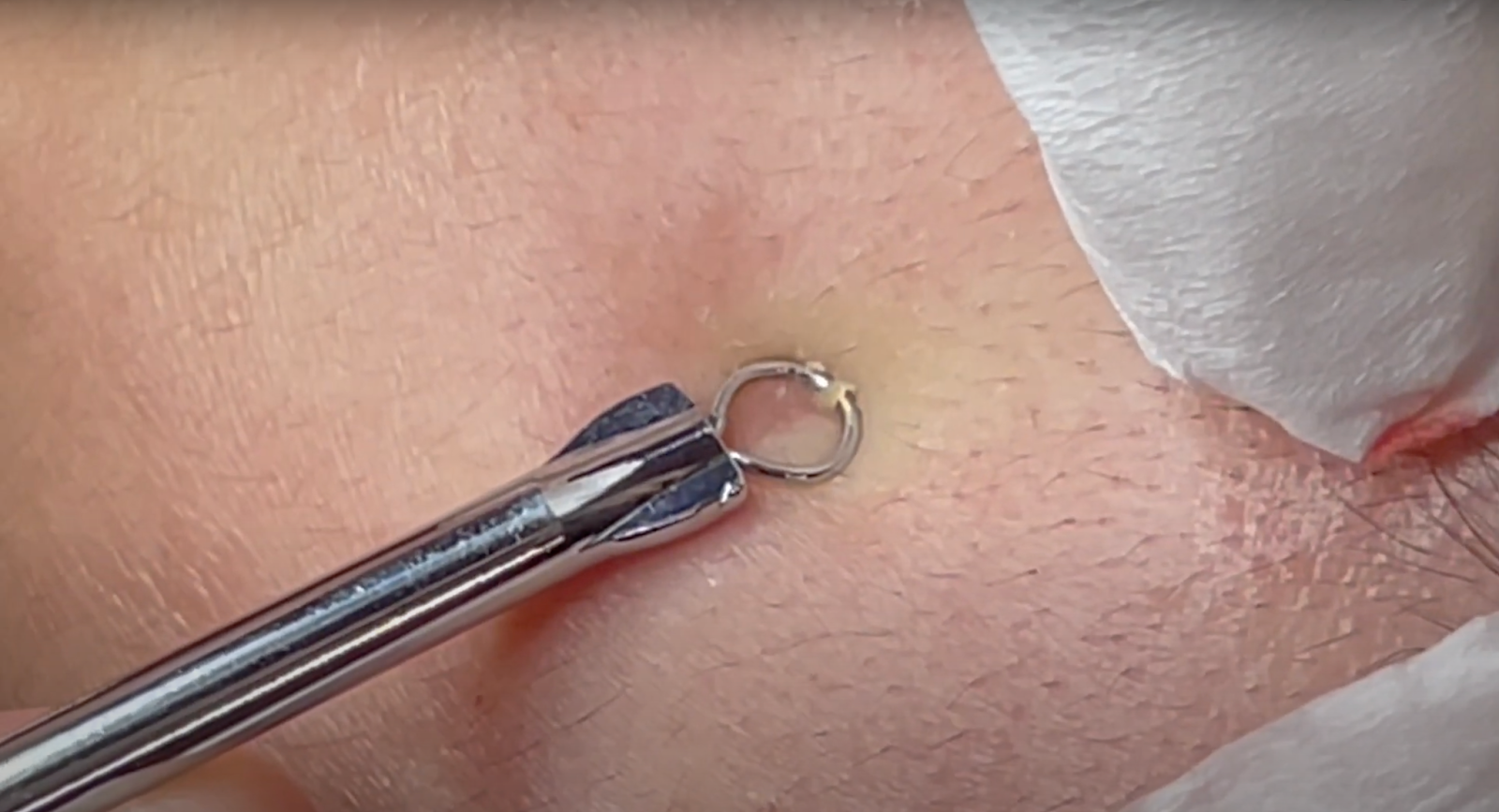
Professional extraction is most useful for suitable blackheads, whiteheads and clogged pores. A trained therapist can see the area clearly, properly prepare the skin and decide whether a particular blockage is ready to be worked on.
Good extraction also involves knowing when to stop.
A deep inflammatory nodule should not be treated like a stubborn blackhead just because both produce a bump on the skin.
Professional extraction cannot guarantee that acne will never scar, and it cannot remove the biological tendency to develop acne. Where it can be useful is in managing suitable congestion without the repeated squeezing and picking that often happens at home.
Can Acne Scars Be Completely Removed?
This depends very much on what you mean by “scar”.
Flat post-acne marks can often become considerably less noticeable with time, sun protection and suitable skincare.
True indented or raised scars are more difficult. Medical treatment can often make them significantly less noticeable, but promising that every acne scar can be completely erased would be unrealistic.
Dermatologists choose treatments according to the scar type, depth, skin tone and individual circumstances. Options may include microneedling, chemical peels, laser treatments, radiofrequency procedures, fillers or minor scar surgery.
Often, more than one approach is used because someone can have several different types of acne scar on the same face.
Treating Active Acne Comes Before Treating Scars
If new inflammatory breakouts are continuing to appear, concentrating all your attention on old acne scars can become frustrating.
Every new deep breakout has the potential to create another mark or scar.
For this reason, dermatologists will often work on bringing active acne under control before beginning more intensive scar procedures.
At home, that might involve proven acne ingredients such as benzoyl peroxide, salicylic acid, retinoids or azelaic acid depending on the type of acne and individual circumstances. Persistent or more severe acne may require prescription treatment.
Professional facials can complement an acne routine when suitable congestion is present, but they should not replace medical treatment for deep, painful or scarring acne.
Where Does an Acne Facial Fit In?
An acne facial can be useful when acne-prone skin also has blackheads, whiteheads, clogged pores and superficial congestion.
At My Cozy Room, our approach begins with looking at the skin rather than assuming that every breakout should be extracted.
For comedonal congestion, we may concentrate more heavily on pore preparation and manual extraction. When the complexion is more inflamed, calming the skin becomes a greater priority and extraction needs to be more selective.
Our Ultimate Anti-Acne LED Facial combines gentle pore care where appropriate with customised LED light therapy and soothing skincare.
The purpose is to support acne-prone skin while still making the treatment comfortable and relaxing, rather than promising that a facial can permanently cure acne or erase established scars.
Charmaine’s Experience With Acne, Marks and Breakouts
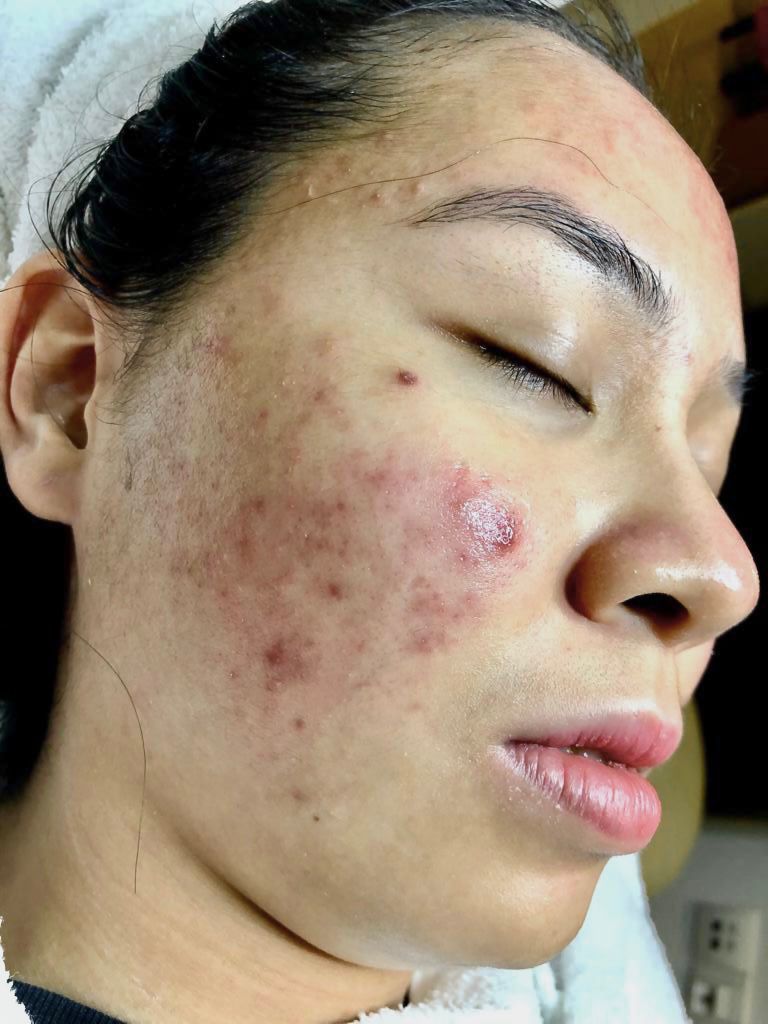
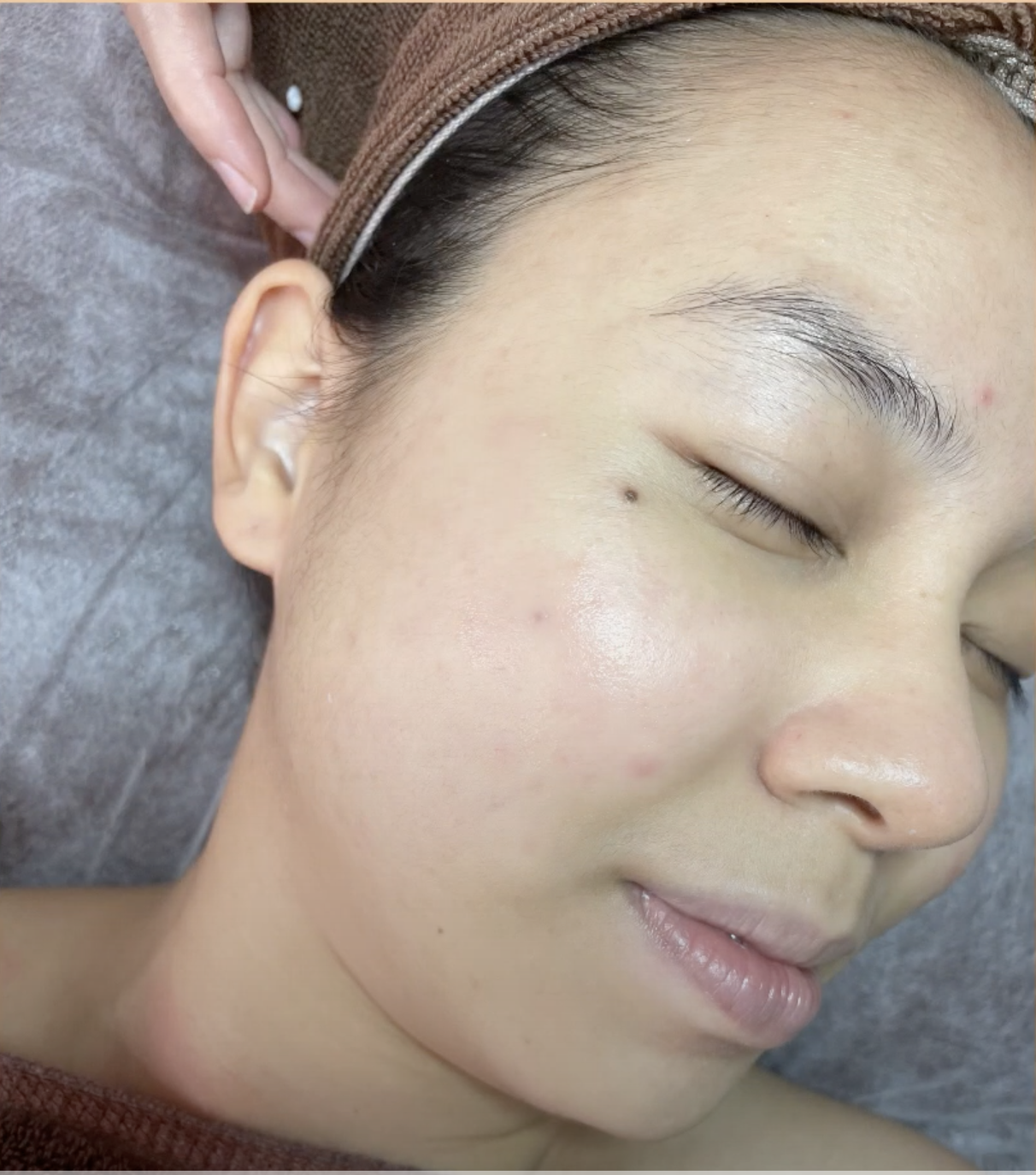
One of our earlier customer reviews came from Charmaine, who had been dealing with recurring breakouts and the marks they left behind.
Stress appeared to coincide with some of her more difficult breakout periods, and like many people with acne-prone skin, she found the marks afterwards almost as frustrating as the pimples themselves.
Before her facial, Charmaine spoke with her therapist about the condition of her skin and the areas she wanted to improve. Based on that consultation, she tried My Cozy Room’s Ultimate Anti-Acne LED Facial.
What she remembered most was how comfortable the treatment felt.
What Was the LED Part of the Facial Like?
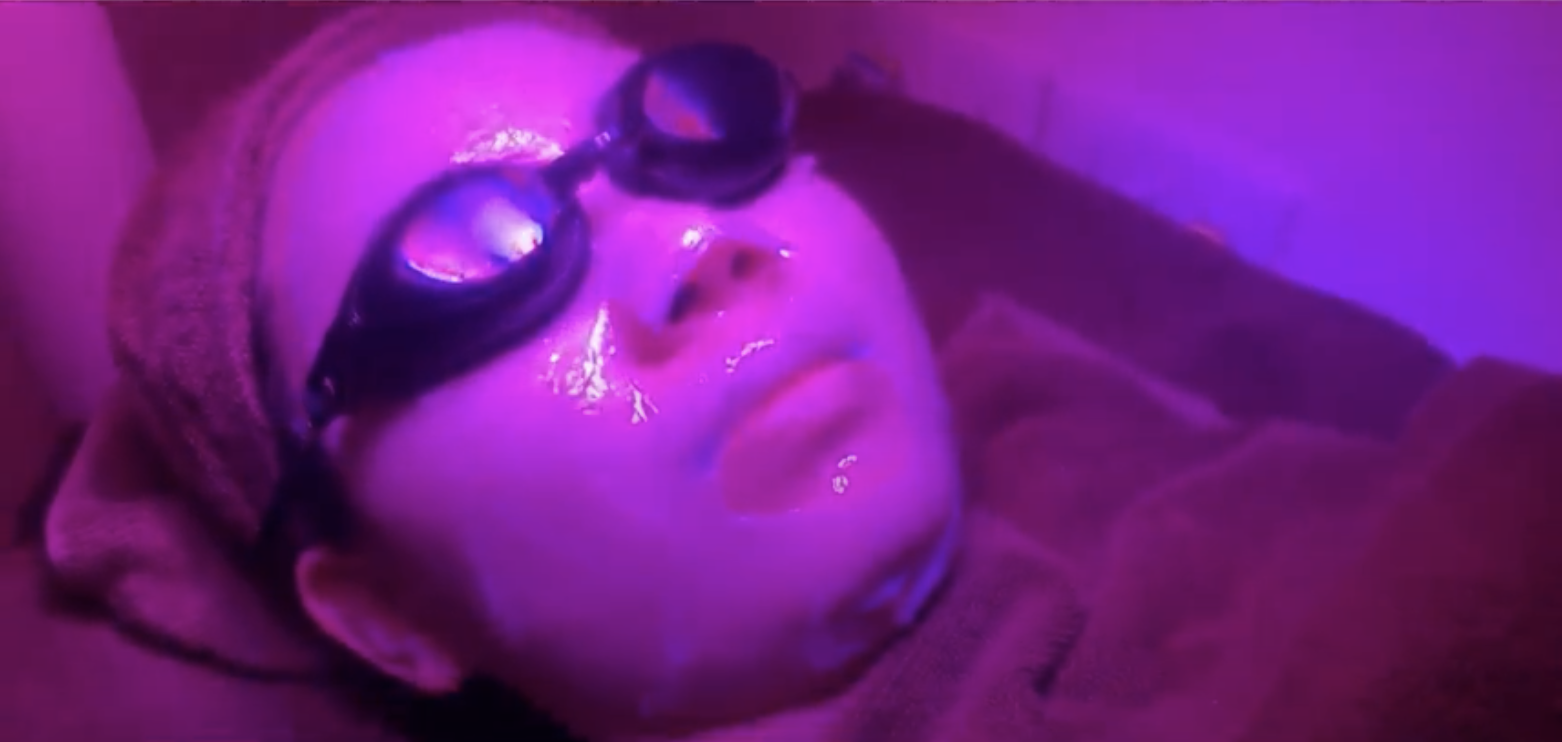
After the pore-clearing stages, Charmaine experienced the LED portion of the treatment.
She described the light treatment as warm and relaxing enough that she eventually fell asleep.
LED and other visible-light treatments are increasingly used as complementary options for acne-prone skin. Certain wavelengths of visible light may help with inflammatory pimples, although results vary considerably between people and a course of treatments may be needed.
LED should therefore be seen as one component of an acne-care plan rather than something that can independently eliminate every blackhead, whitehead, cyst or acne scar.
For Charmaine, however, the treatment provided a soothing stage after extraction and fitted well into the overall facial experience.
It Was Still a Facial, Not Just an Acne Procedure
One thing Charmaine particularly enjoyed was that the treatment did not feel like two hours devoted exclusively to examining and treating her breakouts.
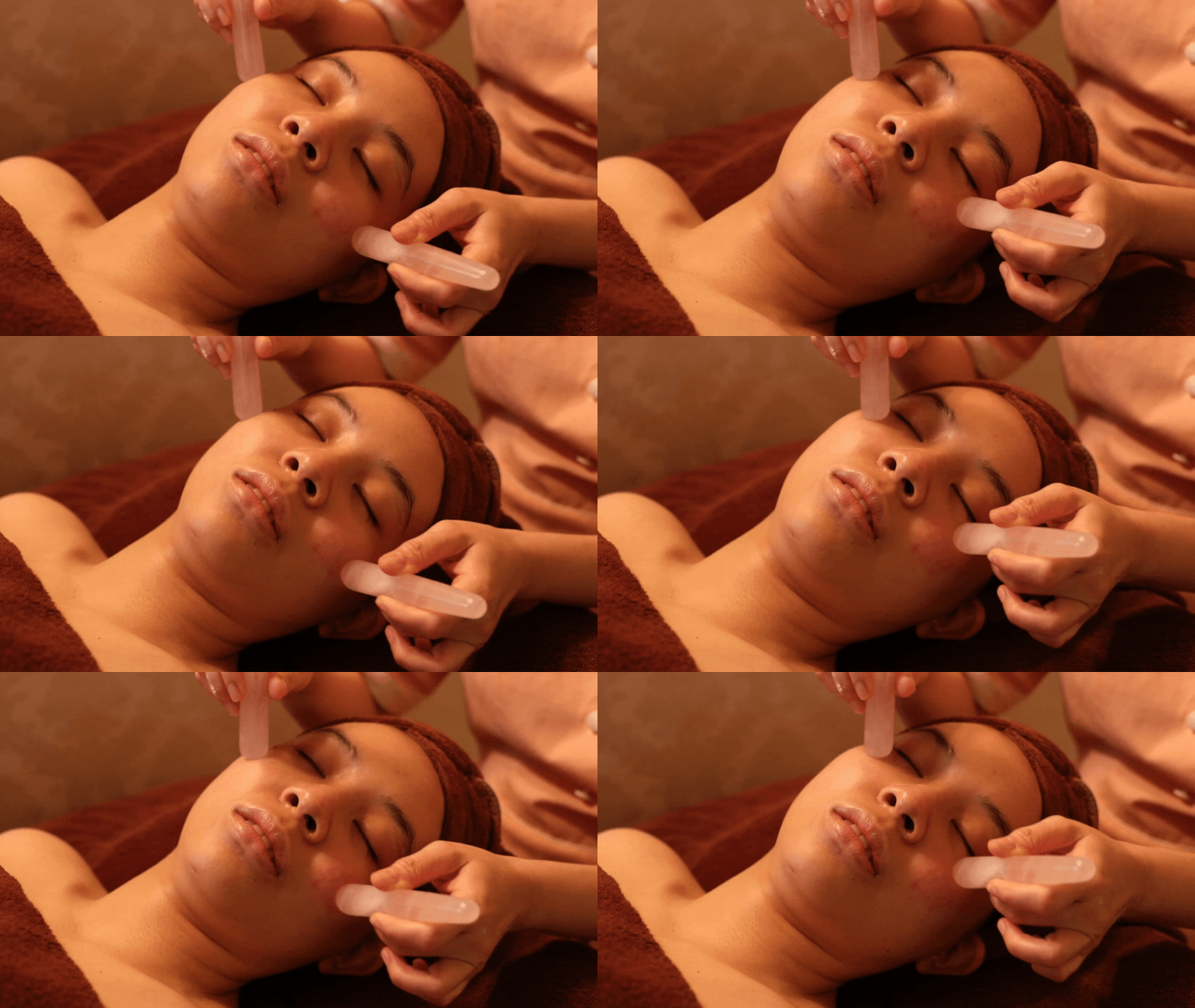
Alongside the acne-focused steps, her facial incorporated relaxing elements such as massage and an alginate mask.
This balance is something we have continued to emphasise at My Cozy Room.
Acne can already make people intensely aware of their skin. Sometimes a treatment where every minute is focused on what is “wrong” with the complexion can make that feeling even stronger.
There is room for results-focused care and genuine relaxation in the same appointment.
Acne Scarring Can Affect More Than the Skin
Charmaine also spoke openly about how her acne had affected her confidence.
When breakouts were particularly noticeable, she became more self-conscious about her face and found herself focusing heavily on both active pimples and the marks they left behind.
That experience is far from unusual. Acne can affect confidence and quality of life well beyond the physical symptoms themselves.
It is also why we are cautious about describing acne purely as a cosmetic inconvenience. For someone who has spent years trying to cover breakouts, avoid photographs or worry about new scars developing, being told simply to “ignore it” is rarely useful.
At the same time, no one should feel that clear skin is a requirement for confidence or that having acne means they have failed at skincare.
How Can You Reduce Your Risk of Acne Scarring?
The most useful time to think about acne scars is actually before the scars develop.
Treat recurring acne rather than waiting indefinitely for it to disappear by itself, particularly if breakouts are becoming deeper or more inflammatory.
Try to resist picking, squeezing and scratching pimples, especially painful lesions that sit beneath the skin.
Use skincare appropriate for acne-prone skin without repeatedly stripping or scrubbing the complexion. Creating additional irritation does not make acne clear faster.
Sun protection also matters, particularly when post-inflammatory pigmentation is an issue. Sun exposure can make lingering pigmentation more noticeable and persistent.
Most importantly, seek medical help when acne is becoming painful, widespread or scarring. Getting active acne under better control can prevent new scars from being added while you are trying to deal with the old ones.
Can Skincare Fade Acne Marks?
Skincare is much more useful for flat post-acne marks than for deep textural scars.
Depending on your skin and the type of pigmentation, ingredients such as retinoids, azelaic acid and certain exfoliating acids may help improve uneven pigmentation over time.
Daily sun protection is also important because UV exposure can make existing pigmentation harder to fade.
What topical skincare cannot realistically do is refill a deep ice-pick scar or release a tethered rolling scar. Those structural changes require a different level of treatment.
Can Facials Remove Acne Scars?
A facial may improve hydration, smooth superficial roughness and make the complexion appear fresher, but we would not describe a spa facial as a treatment that can remove established acne scars.
This distinction is particularly important because clients often use “scar” to describe everything that remains after a pimple.
If the concern is actually a flat post-acne mark, improving the general condition of the skin and preventing new breakouts may help the complexion look progressively more even.
If there is a genuine indentation or raised scar, a dermatologist can discuss procedures specifically designed for that type of scar.
Frequently Asked Questions About Acne Scars
How do acne scars form?
Acne scars develop when inflammation damages deeper layers of the skin and the healing process alters the normal collagen structure. Too little replacement tissue can leave an indentation, while excess scar tissue can create a raised scar.
Do all pimples leave scars?
No. Many acne lesions heal without permanent scarring. Deep inflammatory acne has a greater risk, while picking or squeezing blemishes can increase inflammation and make scarring more likely.
Are dark spots after acne scars?
Usually not. A flat brown, red, pink or purple mark after acne is often post-inflammatory discolouration rather than a true scar. Unlike permanent textural scars, these marks can gradually fade.
How long do acne marks take to fade?
There is no fixed timeline. Some marks improve within a few months, while more persistent pigmentation can remain visible much longer. Skin tone, depth of inflammation, sun exposure and skincare can all influence how quickly they fade.
Can squeezing pimples cause acne scars?
Yes, picking or squeezing can increase inflammation and damage surrounding skin, which may raise the risk of both pigmentation and permanent scarring.
Does LED light therapy remove acne scars?
LED should not be expected to erase established indented or raised acne scars. Visible-light therapy may play a complementary role in managing some active inflammatory acne, which may indirectly help reduce the risk of additional scars by supporting acne control.
Can professional extraction help acne-prone skin?
It can help when blackheads, whiteheads and suitable clogged pores are present. Professional extraction should be selective and should not involve aggressively squeezing deep inflammatory lesions.
What is the difference between an acne mark and an acne scar?
An acne mark is generally flat and involves a colour change. A true acne scar changes the texture of the skin and may appear indented or raised.
When should I see a dermatologist about acne scars?
Consider a dermatologist if acne is already producing pits or raised scars, if you have painful nodules or cysts, if scarring continues to develop or if the scars are significantly affecting you.
Focus on the Acne First, Then the Scars
When you are staring at old marks in the mirror, it is natural to want to get rid of them as quickly as possible. But if new breakouts are continuing to appear, prevention deserves just as much attention as correction.
For mild congestion, that may mean a more consistent home routine and resisting the temptation to squeeze every clogged pore. For blackheads and whiteheads that are difficult to manage yourself, professional extraction may be useful. For inflammatory or persistent acne, medical treatment may need to become part of the plan.
At My Cozy Room, our acne-focused facials are designed around the condition of the skin rather than treating every blemish in exactly the same way.
The Ultimate Pore Extraction Facial is particularly suited to blackheads, whiteheads and stubborn pore congestion, while our Ultimate Anti-Acne LED Facial combines selective pore care with LED light therapy and soothing treatment steps for acne-prone and inflamed skin.
The aim is not to promise that a facial can erase every scar or permanently stop acne. It is to give the skin appropriate professional care, clear suitable congestion carefully and help clients make better decisions about what their skin needs next.
My Cozy Room @ Claymore
Claymore Connect
442 Orchard Road #02-09
Singapore 238879
My Cozy Room @ Devonshire
125 Devonshire Road
Singapore 239884
WhatsApp: +65 8666 0030